
Biodiversity
Biodiversity and the American Chestnut
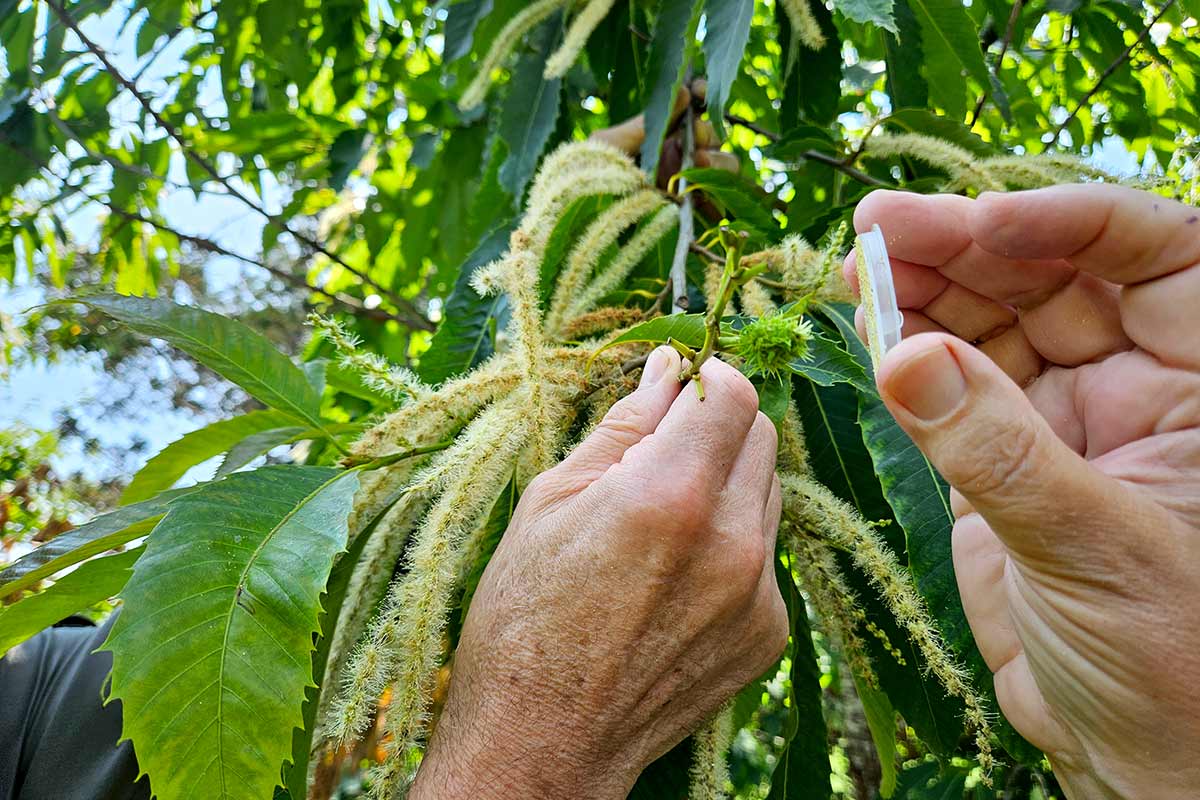
Biodiversity has multiple meanings for conservation of the American chestnut. At the broadest scale, restoring the American chestnut will enhance biodiversity throughout Appalachian forests by reestablishing a foundation species and generating a cascade of benefits for the many plants, animals, fungi, and microorganisms that depend on it. Within The American Chestnut Foundation’s (TACF) breeding program, biodiversity has a more specific meaning: preserving the genetic diversity of remaining wild American chestnut tree populations through the use of Germplasm Conservation Orchards.

What is Germplasm
In plant breeding, germplasm refers to the genetic resources of a species, including seeds, tissues, DNA, or whole plants, that contain heritable variation. This material provides the genetic basis breeders use to select, cross, and develop new plant varieties with targeted traits.
Germplasm Conservation Orchards
Germplasm Conservation Orchards (GCOs) are a core part of TACF’s effort to preserve the American chestnut’s remaining genetic diversity. After the chestnut blight and the much earlier arrival of Phytophthora cinnamomi in the South, only scattered remnant trees remain, and many of the most diverse southern populations are now the hardest to access or already gone. With Phytophthora root rot (PRR) continuing to spread and climate change likely causing further decline in the southern portion of the species’ range, capturing and preserving this material is increasingly urgent. TACF’s GCO program collects germplasm from across all seed zones to ensure that these last wild sources of adaptive variation are not lost.
Why GCOs are Important
These orchards supply the genetic foundation for TACF’s breeding and genomic work. They contain both collections from individual remnant trees and trees that have been meticulously crossed with one another to combine genetics from desirable disease-resistant American trees. This structure supports our recurrent genomic selection (RGS) breeding program, which relies on broad and well-documented genetic resources. While the germplasm may support future biotech tools, its most immediate value is simple: keeping these genetic lines alive and available for scientific use rather than losing them on the landscape.
Preserving Regional Genetic Diversity
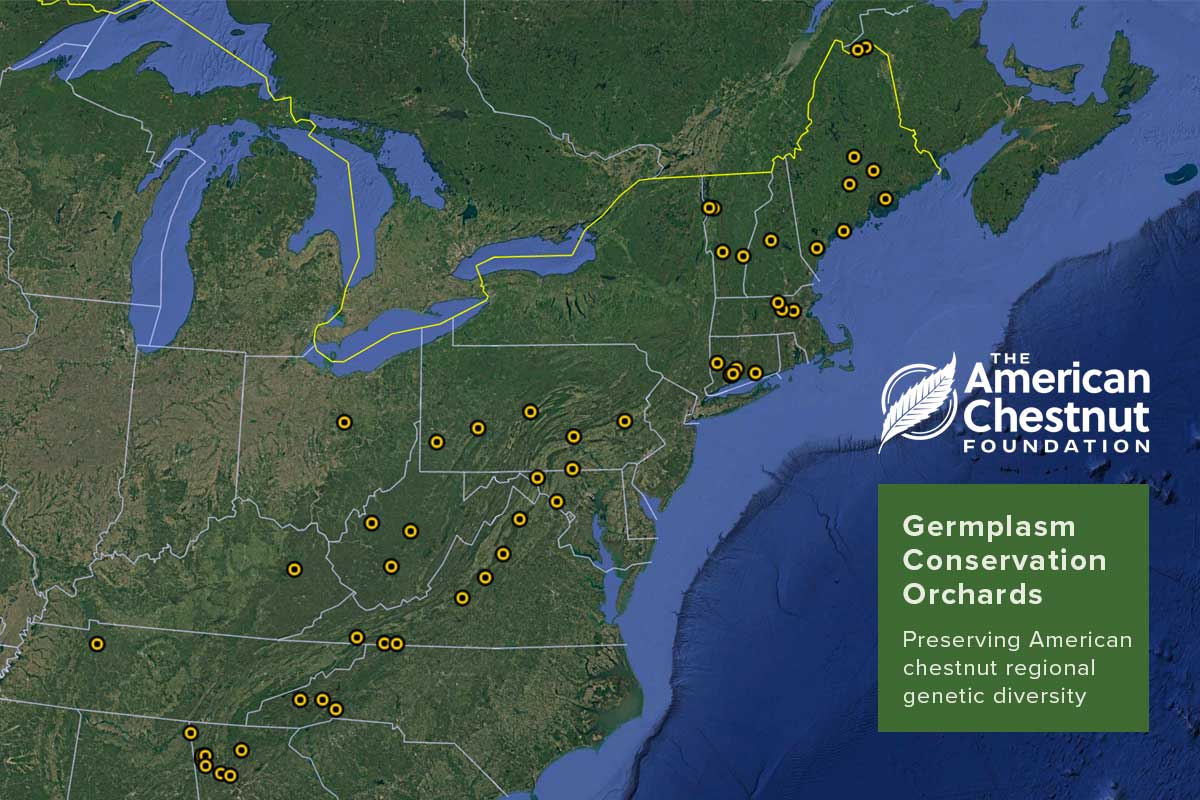
TACF, in cooperation with a wide range of partners, stewards more than 70 active Germplasm Conservation Orchards spanning the native range of the American chestnut. This extensive representation from across three genetically distinct seed zones, northeastern, central, and southwestern, will improve future RGS cycles and provide access to greater diversity across traits such as growth form, fecundity, and regional adaptability.
For volunteers, partners, and stakeholders, GCOs represent a nearly range-wide, long-term program that is distinctive to TACF. They demonstrate our commitment to conserving the species’ natural heritage and ensure that future restoration efforts draw from a diverse, regionally relevant, and resilient genetic base.
How You Can Help
There are many ways you can help preserve genetic diversity in the American chestnut.
- Learn how to find American chestnut tree in the wild.
- Record undocumented trees on TreeSnap.
- Send in a sample for identification. If it’s an American chestnut, we’ll add it to our database for potential inclusion in future breeding efforts and GCOs.
- Volunteer with your local chapter to assist with the long-term maintenance of GCOs in your area.
- Become a member or donate to support the program.
We are deeply grateful to TACF’s volunteers, partners, donors, and members for supporting this ambitious mission. Thank you!
