Virginia News

Orchard Maintenance at the Roland Orchard

The Roland Orchard was initially planted in the spring of 2008.  Additional trees were planted in April 2009. There were originally 385 trees: 15 were pure American; 15 were pure Chinese, 15 were 50-50 crosses between American and Chinese, and the remaining 320 were the crosses we are breeding for blight resistance. About 25 trees died over time, leaving about 360 trees, which were inoculated last summer. Dr. Fred Hebard traveled from the Meadowview Research Farm to the Roland Orchard on March 29-30 to determine which trees have sufficient blight resistance to be continued in the breeding program.   He selected the healthiest 90 to keep; the remaining 270 were removed .

Volunteers used chain saws to cut down the trees, some of which had reached 4 inches in girth and heights of 20 feet or more.  The diseased trees will be removed from the orchard.

The remaining trees will be allowed to interbreed.  It is hoped that the seeds they produce will have an increased survival rate.
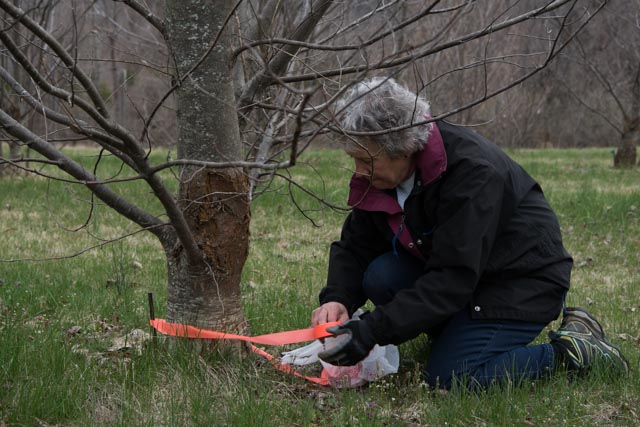
Virginia Chapter President Cathy Mayes tags trees to be retained for future breeding.
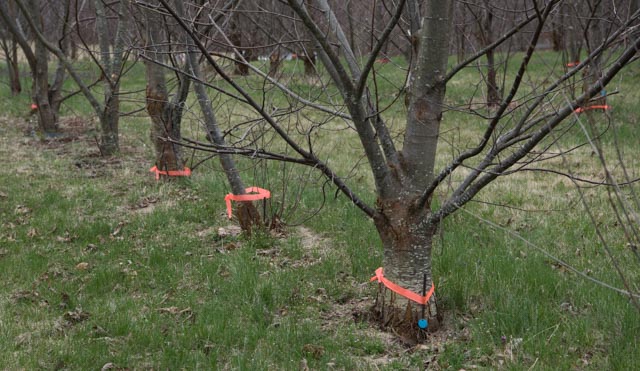
Tags mark healthy trees that will remain in the Roland Orchard.
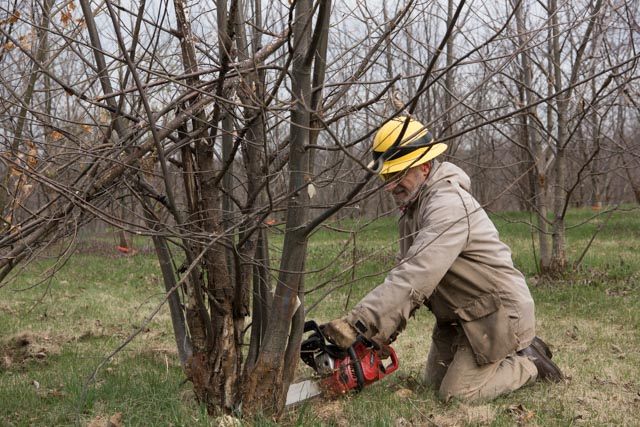
 

Jack Lamonica cuts down a diseased chestnut tree.
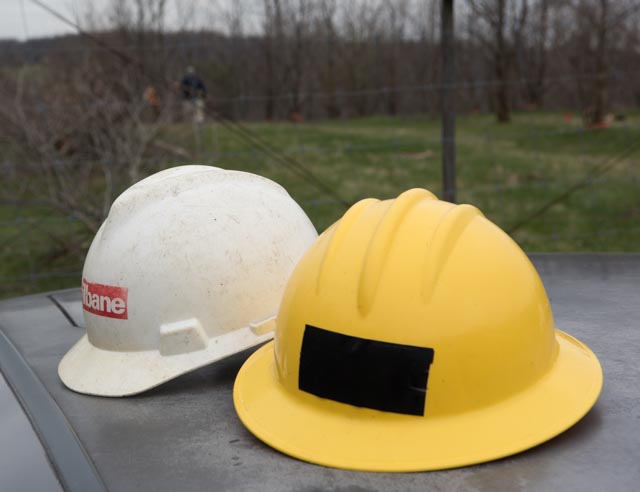
 

Safety first! The work can be hazardous.


Virginia News Chapter Menu

National Facebook

Comments Box SVG iconsUsed for the like, share, comment, and reaction icons

We've prepared a completely legitimate and highly scientific quiz.

Take the quiz, then drop your results in the comments:

🤓 Confidently Wrong
🌱 Chestnut Curious
🌰 Chestnut Expert

#AmericanChestnut #TreeID #ForestEducation #ChestnutTrees #NativeTrees
... See MoreSee Less

Weve prepared a completely legitimate and highly scientific quiz.Take the quiz, then drop your results in the comments:🤓 Confidently Wrong 🌱 Chestnut Curious 🌰 Chestnut Expert#AmericanChestnut #TreeID #ForestEducation #ChestnutTrees #NativeTreesImage attachmentImage attachment+7Image attachment

4 CommentsComment on Facebook

I got a 4 on this.

I got 3 out of 4!

🌱

Just a few years apart: the same wild American chestnut tree before and after chestnut blight took its toll.

Enter our 2026 Photo Contest from now until the end of December!

#americanchestnut #chestnutblight #ForestEcology #NativeSpecies #ForestConservation
... See MoreSee Less

Just a few years apart: the same wild American chestnut tree before and after chestnut blight took its toll. Enter our 2026 Photo Contest from now until the end of December! #AmericanChestnut #ChestnutBlight #ForestEcology #NativeSpecies #ForestConservationImage attachmentImage attachment+1Image attachment

Please share your stories! ... See MoreSee Less

Please share your stories!Image attachment

American chestnuts produce separate male flowers and bisexual flowers on the same tree?! What a fascinating reproductive strategy for a species once dominant across eastern forests. 🌿

#americanchestnut #treefacts #treeidentification #ForestEcology #SaveOurForests
... See MoreSee Less

5 CommentsComment on Facebook

I have had these on the farm for years

BeeKeeper Mango

From looking at the leaves that is NOT an American chestnut. The leaves do not have the good fishhook profile on the edges, and from what can see they look like Japanese chestnut leaves which have small feathery edges.

View more comments

Small Stem Assays involve inoculating young chestnut stems with the blight fungus and monitoring the resulting cankers, allowing researchers to assess how well different trees respond to infection.

#educational #Informative #americanchestnut #fieldwork #explore
... See MoreSee Less

2 CommentsComment on Facebook

You don't find out if the tree is resistant until it matures. That could be a decade later.

I am always amazed how big you all can grow them in 1 year. That is how big my second year seed8 gs always are!

Load more