Virginia News

Successful Blue Ridge Heritage Planting – May 28

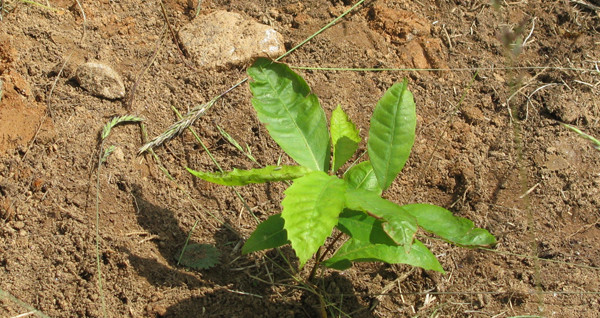
Blue Ridge Heritage, Inc. (BRHI), in partnership with The American Chestnut Foundation (TACF) is planting native American chestnuts on the property BRHI purchased last year (in the Rocky Knob area of the Blue Ridge Parkway). These plantings are test sites, allowing the group to judge overall sun/shade, soil composition, and drainage for a future planting of the potentially blight-resistant chestnuts that TACF has named “Restoration Chestnuts.”

The test plots were selected by BRHI officers and vetted by Matt Brinckman, Mid-Atlantic Regional Science Coordinator, TACF. Brinckman and his summer intern, Jennifer Santoro, who is a graduate student at Duke University earning her master of forestry and master of environmental management degrees, brought 27 native American saplings to the BRHI property to plant on Tuesday, May 28, 2013. The group planted test areas with 5 and 6 saplings in each area. Although these non-resistant trees will eventually succumb to the blight, the partnership reps hope that they will live long enough to offer good data about which sites on the property the Restoration Chestnuts, to be planted in the future, will be able to thrive.

“We would love to allow visitors to this area to see surviving tall chestnut trees, which have been absent from this area for decades,” says Steve Swartz, BRHI president. “We are looking forward to a long-lasting partnership with The American Chestnut Foundation to mutually move our shared goals forward.”

Once the mighty giants of the eastern forests, American chestnuts stood up to 100 feet tall, and numbered in the billions. They were a vital part of the forest ecology, a key food source for wildlife and an essential component of the human economy. In 1904 the fungal pathogen responsible for chestnut blight, accidentally imported from Asia, spread rapidly through the American chestnut population. By 1950 it had killed virtually all the mature trees from Maine to Georgia. Several attempts to breed blight resistant trees in the mid-1900s were unsuccessful.

Blue Ridge Heritage, Inc. is a 501(c)(3) nonprofit dedicated to promoting education and economic development through place-based programs related to the natural and cultural heritage of Floyd and Patrick Counties. BRHI’s educational offerings will focus on the period of history between 1900 and 2000; this “Century of Change” includes the rise and fall of the “chestnut economy” in mountainous southwest Virginia. One goal of the group is to partner with TACF and showcase Restoration Chestnuts on the property along the Blue Ridge Parkway.

In 1983, a dedicated group of scientists formed The American Chestnut Foundation and began a special breeding process, which in 2005 produced the first potentially blight-resistant trees called Restoration Chestnuts 1.0. Now assisted by nearly 6,000 members and volunteers in 16 state chapters, the organization is undertaking the planting of Restoration Chestnuts 1.0 in select locations throughout the eastern US as part of the Foundation’s early restoration efforts. TACF is a 501(c)(3) conservation organization headquartered in Asheville, NC.

For  more information about BRHI or TACF, please contact Lee Chichester: en.avws@renoclaft or 540-593-2011.


Virginia News Chapter Menu

National Facebook

Comments Box SVG iconsUsed for the like, share, comment, and reaction icons

Inside this American chestnut box is a Dolly Parton song that no one will hear until 2046.

Dolly Parton's "Dream Box" will remain sealed until her 100th birthday. Made from American chestnut wood, it stands as a tribute to her uncle and mentor, Bill Owens.

Many know Owens as an important influence on Dolly's songwriting. Fewer know that he was also a tireless advocate for restoring the American chestnut, a tree once thought lost from eastern forests.

Inside the chestnut box is a song Dolly wrote to be released as her last: "My Place in History."

There is something fitting about that. A song about the place we leave behind, preserved in a box made from a tree once thought lost that generations of people have worked to bring back.

Like so much in conservation, Bill Owens' legacy is not only what he accomplished himself, but what he passed on: knowledge, passion, and a connection to those who came after him.

Forests endure because people choose to carry them forward. So do legacies.

When that box is finally opened in 2046, I hope to be listening to "My Place in History" beneath the shade of an American chestnut; one that Bill Owens helped bring back.

#AmericanChestnut #ForestRestoration #DollyParton #Conservation #Legacy
... See MoreSee Less

Inside this American chestnut box is a Dolly Parton song that no one will hear until 2046.Dolly Partons Dream Box will remain sealed until her 100th birthday. Made from American chestnut wood, it stands as a tribute to her uncle and mentor, Bill Owens.Many know Owens as an important influence on Dollys songwriting. Fewer know that he was also a tireless advocate for restoring the American chestnut, a tree once thought lost from eastern forests.Inside the chestnut box is a song Dolly wrote to be released as her last: My Place in History.There is something fitting about that. A song about the place we leave behind, preserved in a box made from a tree once thought lost that generations of people have worked to bring back.Like so much in conservation, Bill Owens legacy is not only what he accomplished himself, but what he passed on: knowledge, passion, and a connection to those who came after him.Forests endure because people choose to carry them forward. So do legacies.When that box is finally opened in 2046, I hope to be listening to My Place in History beneath the shade of an American chestnut; one that Bill Owens helped bring back.#AmericanChestnut #ForestRestoration #DollyParton #Conservation #Legacy

97 CommentsComment on Facebook

Hope I live to 92 to hear it and if I do, I hope my brain knows what I’m listening to!

Gosh, I'm going to have to reincarnate to hear this in 2046! Hoping to be born in Appalachia, maybe as a squirrel....

I'll be gone in 20 years. I'm mid 70s now. I understand her wanting to wait, but wouldn't it have been better for her to just name a number, like 5 years beyond her date of death or something like that, so that people who knew her, remembered her, would appreciate it more? 20 years from now my kids will be in their 70s, and they may or may not remember her. My grandkids won't have a clue. And they'll be middle-aged! Kind of a shame. She must have had her reasons however ❤️😭

View more comments

"Dolly's music is rooted in the Appalachians," her uncle Bill Owens once said. "The American chestnut was once the most important tree in these mountains, feeding wildlife and people alike."

The comparison feels especially meaningful today. Both Dolly Parton and the American chestnut grew from Appalachian roots to become enduring icons. Both nourished generations, one with food and shelter, the other with music, compassion, and hope. Both became symbols of resilience, generosity, and the richness of mountain culture.

The American chestnut's story lives on in the forests it shaped. Dolly's story lives on in the millions of lives she touched.

Appalachia gave the world both. And the world is better because it did.

Read our article "Dolly Parton: A Life Rooted In Giving" about Dolly's work with the Foundation and see how far her generosity reached: tacf.org/dolly-parton-a-life-rooted-in-giving/

#dollyparton #news #explore #tribute #country
... See MoreSee Less

Dollys music is rooted in the Appalachians, her uncle Bill Owens once said. The American chestnut was once the most important tree in these mountains, feeding wildlife and people alike.The comparison feels especially meaningful today. Both Dolly Parton and the American chestnut grew from Appalachian roots to become enduring icons. Both nourished generations, one with food and shelter, the other with music, compassion, and hope. Both became symbols of resilience, generosity, and the richness of mountain culture.The American chestnuts story lives on in the forests it shaped. Dollys story lives on in the millions of lives she touched.Appalachia gave the world both. And the world is better because it did. Read our article Dolly Parton: A Life Rooted In Giving about Dollys work with the Foundation and see how far her generosity reached: https://tacf.org/dolly-parton-a-life-rooted-in-giving/ #dollyparton #news #explore #tribute #countryImage attachmentImage attachment

6 CommentsComment on Facebook

As we mourn the loss of Dolly we should all take a moment in honor of the greatest person ever from East Tennessee in my lifetime. Her never-ending kindness, generosity, creativity, ambition, drive and raw talent will never be forgotten and should be an inspiration to us all.

I love this story!

She was a larger-than-life mountain nymph <3

View more comments

This is part two so if you didn't see our last post, go check it out! When blight reached the remaining American chestnuts in Wisconsin's historic stand, the Helming family faced a difficult decision.

Today, those trees live on as part of a display at the National Museum of Forest Service History, where their story will inspire future generations.

Read an exclusive excerpt from an upcoming Chestnut magazine article about the process, and become a member to read the complete story in the next issue.

Click the following link to read: tacf.org/tacf-at-national-museum-forest-history/

#americanchestnut #member #restoration #news #explore
... See MoreSee Less

This is part two so if you didnt see our last post, go check it out! When blight reached the remaining American chestnuts in Wisconsins historic stand, the Helming family faced a difficult decision. Today, those trees live on as part of a display at the National Museum of Forest Service History, where their story will inspire future generations.Read an exclusive excerpt from an upcoming Chestnut magazine article about the process, and become a member to read the complete story in the next issue.Click the following link to read: https://tacf.org/tacf-at-national-museum-forest-history/ #americanchestnut #member #restoration #news #exploreImage attachment

Thank you for doing this! We love opportunities to inspire the next generation 🌰 ... See MoreSee Less

Thank you for doing this! We love opportunities to inspire the next generation 🌰Image attachmentImage attachment

1 CommentComment on Facebook

Way to go Lake!

In 2020, signs of chestnut blight appeared on one of the largest known American chestnut stands in the country, leading to the difficult decision about how to preserve its legacy.

Read the story of this remarkable stand: ivtlogs.com/american-chestnut/

Then follow us for our next post, where we'll share how the remaining trees from this historic stand were harvested to become part of a display at the National Museum of Forest Service History. You'll also get a preview of an upcoming article from our award-winning Chestnut magazine that tells the rest of this bittersweet story.

#explore #news #americanchestnut #hope #newlife
... See MoreSee Less

In 2020, signs of chestnut blight appeared on one of the largest known American chestnut stands in the country, leading to the difficult decision about how to preserve its legacy.Read the story of this remarkable stand: https://ivtlogs.com/american-chestnut/ Then follow us for our next post, where well share how the remaining trees from this historic stand were harvested to become part of a display at the National Museum of Forest Service History. Youll also get a preview of an upcoming article from our award-winning Chestnut magazine that tells the rest of this bittersweet story.#explore #news #americanchestnut #hope #newlife

73 CommentsComment on Facebook

I took over property that has been in my family 200 years. I'm the first to farm it in 100 years. I found two in the back of the property in the holler.

i have a 7/8 american: 1/8 chinese chestnut tree doing very well and has begun to produce chestnuts.

I hate this story. First, to say the trees got a ‘new lease on life’ is a connotative misnomer and disingenuous. A new lease on life would mean that they were saved. What they really got—inevitably, I understand—is a different use in death that allowed someone to make money off their demise. That’s better than letting them rot, but it’s not a happy ending. The fact that the story is written by someone from the timber company, reflecting the point of view of a party to the situation whose motivation is monetary, just ads to the disingenuousness of this story being posted by ACF. Are you conservationists or loggers? The ‘passion for the history’ of the American chestnut time is just a contrivance to make the situation less bleak and depressing. My takeaway is that the last stand of chestnuts is gone and no replacements are arriving anytime soon. From ACF, I want content about progress in bringing chestnut trees back, not a clumsily-glossed-up summary of how someone made money on the last ones we had.

View more comments

Load more