Virginia News

Wild Surviving Chestnut Found in Prince William Forest Park

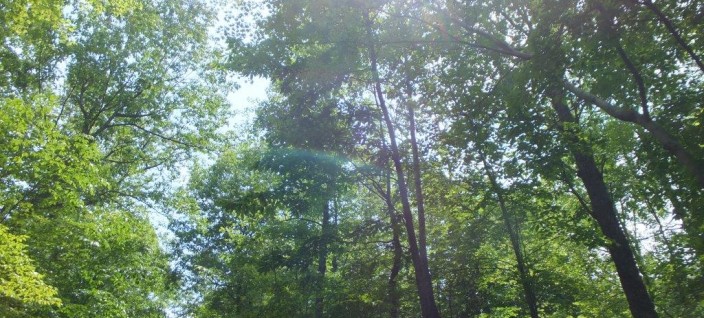
Finding large, wild, surviving American chestnuts is always exciting, but to find a healthy one below the fall line in Virginia is both exciting and special.  But there it is, right next to a trail in Prince William Forest Park.

Prince William Forest Park preserves approximately 15,000 acres of piedmont forest covering a major portion of the Quantico Creek watershed. The park is the third largest unit of the National Park System in Virginia. It is located at the convergence of the northernmost range of many southern species and the southernmost range of many northern species; and at the convergence of the coastal plain and piedmont geologic zones, yielding a huge diversity of plant and animal life in the shadow of the D.C. metropolitan area.   It was once loaded with chestnut trees, but until this discovery, no one knew whether any still survived.

VATACF has applied for a research permit to release this tree.  If we are successful, the tree might produce pollen next year or the year after, and if we can keep it healthy, might produce burs the year following.  Then the tree can be bred to a blight-resistant hybrid to begin a line of blight-resistant American chestnuts suitable for reforesting the forests in the Quantico Creek watershed.

Nickname:  the Petersen Tree
Height:  75 feet
Diameter at breast height:  18.8 cm
Location:  Taylor Farm Road

Virginia News Chapter Menu

National Facebook

Comments Box SVG iconsUsed for the like, share, comment, and reaction icons

Lesesne State Forest is 422 acres, and lies next to Three Ridges Wilderness Area in Nelson County, VA. TACF and VA Department of Forestry partner in managing and breeding chestnuts here for restoration. TACF hosted our partners and national board members on a tour of the orchard in mid-November. ... See MoreSee Less

3 CommentsComment on Facebook

Going here for the first time, seeing all the big American Chestnuts and also watching Bill Deeter 's videos and pictures of his trees convinced me that it is possible to breed resistance into American chestnuts! We got this folks

Cool. I planted 56 Dunstan chestnuts on Nov. 3 in damp peat moss. I have to transfer to potting soil soon, they're all sprouting. And I mean it looks like every single nut has germinated.

This beautiful state forest is a must-visit for nature lovers and outdoor enthusiasts!

We’re on the Naturally Scott Podcast!
Our President & CEO sat down with Scott to talk about the past, present, and future of the American chestnut — from its historic role in Appalachia to the cutting-edge science driving restoration today.

- Why the roots never died
- The cutting-edge science behind restoration
- Why volunteers and donors are leading this effort

Watch the full episode now and join us in bringing back America’s iconic tree:

www.youtube.com/@NaturallyScott

podcasts.apple.com/us/podcast/naturallyscott/id1830513032
... See MoreSee Less

We’re on the Naturally Scott Podcast!
Our President & CEO sat down with Scott to talk about the past, present, and future of the American chestnut — from its historic role in Appalachia to the cutting-edge science driving restoration today.

- Why the roots never died
- The cutting-edge science behind restoration
- Why volunteers and donors are leading this effort

Watch the full episode now and join us in bringing back America’s iconic tree:

www.youtube.com/@NaturallyScott

podcasts.apple.com/us/podcast/naturallyscott/id1830513032
... See MoreSee Less

🐛 Large silk moth caterpillar native to North America, not a threatened species fairly common *but beautiful.
🌳 Tree is a wild American chestnut planted for a PRR fungicide trial in Clemson, SC.

Photo credit: Celeste Giles, Research Associate with the Plant and Environment Sciences Department at Clemson
#americanchestnut #explore #nature #bugs #chestnuts #caterpillar
... See MoreSee Less

🐛 Large silk moth caterpillar native to North America, not a threatened species fairly common *but beautiful.🌳 Tree is a wild American chestnut planted for a PRR fungicide trial in Clemson, SC.Photo credit: Celeste Giles, Research Associate with the Plant and Environment Sciences Department at Clemson #americanchestnut #explore #nature #bugs #chestnuts #caterpillarImage attachmentImage attachment

3 CommentsComment on Facebook

Can you tell us more about the PRR fungicide trial?

So cool. Curious if the funguscide harms the catepillar and insects?

Speaking of threat, our local university has discovered the chestnut weevil is not extinct as was thought. www.actionnews5.com/2025/12/08/uofm-researchers-rediscover-weevil-believed-be-extinct-thanks-phot...

In celebration of GivingTuesday, TACF’s Board of Directors and President & CEO Michael Goergen came together to issue a matching gift challenge. The original goal was $5,000, but because of their collective passion and generosity a total of $18,125 has been raised, making the impact of your gift even greater. If that amount is reached, it will double to $36,250! Visit the link in our bio to donate. ... See MoreSee Less

In celebration of GivingTuesday, TACF’s Board of Directors and President & CEO Michael Goergen came together to issue a matching gift challenge. The original goal was $5,000, but because of their collective passion and generosity a total of $18,125 has been raised, making the impact of your gift even greater. If that amount is reached, it will double to $36,250! Visit the link in our bio to donate.
Load more