|
|
|
|


|
|
|
|

UPDATE: Since the announcement of Project Tamarack, many members of our community have asked about the future of the American chestnut grove at Clements State Tree Nursery.
The quote featured in this post comes directly from the Project Tamarack website and states that the American chestnut grove will not be affected by the planned data center development.
As we continue to follow developments related to this project, we remain committed to sharing accurate information and updates with our community.
Source: Project Tamarack FAQ
#americanchestnut #WestVirgina #clements #forestry

16 CommentsComment on Facebook
The American Chestnut Foundation, I live nearby. We now know Tamarack is a different project further north. This site is the second phase of the Monarch Campus being developed by Nscale. Div of Forestry operated the nursery but DNR owned the land, which is in the process of being sold to the developer. I spoke to both of those agencies within the last few days.
The orchard is on the Monarch data center site, not the Tamarack site.
Feels like the entire USA needs to stand together to save the ecosystem. Same thing is happening in Driftless, USA. Our forest is full of butternuts, among other amazing, ecological wonders.
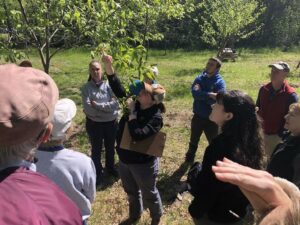
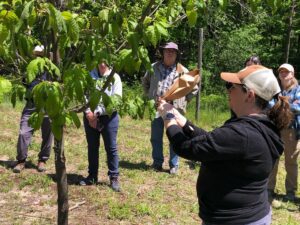
Recently, 45 students in grades 5-8 at Christ the King Church & School in Rutland, Vermont, helped harvest American chestnuts from trees planted by 8th graders back in 2019. Students opened burs, explored fertile and sterile seeds, felt the unique textures of the burs, and learned about the history of the American chestnut and the restoration efforts underway today.
A special thank you to TACF member Thomas Estill for leading this engaging experience and helping connect students with one of America's most iconic native trees. The students can't wait to roast them this week and experience that sweet starchy flavor.
#AmericanChestnut #ChestnutRestoration #EnvironmentalEducation #FutureForesters #STEMeducation
11 CommentsComment on Facebook
Are they blight resistant?
I did the same with a group of middle school students in northern lower Michigan. I was able to show them both young trees I had planted and mature trees more than likely planted by pioneer settlers to the area in the 1850's. The same family still owns the land the mature trees are on. The mature trees look healthy and are all 40+ feet tall-must have been planted beyond the blight line.
What a wonderful thing! We recently had three biology classes at Robin Hill Nature Preserve. It was a thrill to see the kids asking questions, making sketches and filling their notebooks.
"American chestnut trees were wiped out more than a century ago. Now, new trees that are fungus-resistant are being planted at the zoo."
Read this article by the New York Times about a chestnut tree planting today at the Bronx Zoo, where chestnut blight was first discovered.
Click the following link to read the article: www.nytimes.com/2026/10/05/nyregion/chestnut-trees-bronx-zoo.html?unlocked_article_code=1.GVE.LAU...
#news #americanchestnut #explore #NY #forestry
52 CommentsComment on Facebook
We had a chestnut tree in the yard of an air bnb in Washington's Crossing, PA.
They are hybrid trees, not full American.
Utter waste of time. They’ll be dead from the blight in 50 years just like all true Anerican chestnut trees. These scientists are creating hybrids because they cannot stop the blight.
We're grateful to see the important work of American chestnut restoration highlighted by Wild Appalachia.
The segment features WV Chapter member Mark Double and TACF partner Dr. Amy Metheny of WVU, who share why restoring this iconic native tree matters and the progress being made in West Virginia and beyond.
Watch the whole video or read the article here: wchstv.com/community/wild-appalachia/wild-appalachia-american-chestnut-restoration
3 CommentsComment on Facebook
my daughter in mt pleasant ny ( catskills) has a huge american chestnut tree in front of her 1904 home. somehow it missed the blight
I just sent this as email to Governor Morrisey in West Virginia. Please do the same and send to everyone and anyone who may be able to help in an effort to save Clements Nursery American Chestnut Grove. "Dear Governor Morrisey. I have learned that a private corporation plans to destroy the grove of American Chestnut trees at Clements Nursery. For the love of god and all that is good in this world please help to preserve these American Chestnut trees. There are not that many genuine American Chestnut trees that are still growing and what you have there in West Virginia is a national treasure that cannot be replaced with any amount of money, gold or riches. I among with many other multi generational Americans believe this grove of trees should be a treasured working national historic landmark producing seeds and seedling for reestablishing genuine pure American Chestnut trees in our Appalachian Mountains and throughout our country."
They are planning to destroy the site on Nov. 1, 2026 for a data center 🙁