


About Us
The Virginia Chapter is actively engaged in efforts to bring the American chestnut back to Virginia’s forests. Our all-volunteer efforts include tree breeding, production seed orchards, nursery and greenhouse production of seedlings, and forest plantings of chestnuts. We also promote and educate about our restoration mission. Join and support us in our various activities across the Commonwealth.
Contact Us
Email: moc.liamg@tuntsehcav
Phone: (540) 506-3363
Our Mailing Address:
900 Natural Resources Drive, Suite 800
Charlottesville, VA 22901
The Regional Science Coordinator for Virginia is Kaitlyn Harless.
Email: gro.fcat@sselrah.nyltiak
VA Department of Forestry Central Office
900 Natural Resources Dr. Suite 800
Charlottesville VA, 22903
Phone: (434) 443-0330
Donate to the Virginia Chapter
Make a one-time donation to support our restoration activities or schedule monthly donation to sustain our continuing operations.
Become a Sustaining Donor
Become a sustaining donor by putting us in your will, estate plans, or donating land for a breeding orchard. Without people like you, The American Chestnut Foundation wouldn’t exist as it does today.
Virginia Chapter Menu
National Facebook

This excellent article takes a deep dive into the history of the American chestnut, the science driving restoration efforts, and the communities helping make recovery possible. Be sure to read the perspectives shared by TACF Director of Science Jared Westbrook, Board Member Jim Searing, and PA/NJ Chapter member Mike Aucott. 🌳🌰
Read the article: rivertownsmagazine.com/stories/the-return-of-the-american-chestnut-tree,146154
#americanchestnut #forestry #forestrestoration #citizenscience #conservation

36 CommentsComment on Facebook
Thanks for sharing! This was a great article and we're glad to be part of the restoration efforts.
I have acreage, but no idea how to purchase these.
I will be pleased if a 100 ft, tall tree with a sweet chestnut can be developed from any of these approaches.
The 2026 American Chestnut Symposium is taking shape! The current schedule is live, featuring expert presentations, panel discussions, restoration updates, networking opportunities, and field tours designed to bring our community together around the future of American chestnut restoration
Have research, restoration work, or a project to share? Consider participating in the poster session and connecting with fellow scientists, volunteers, conservation professionals, and chestnut enthusiasts.
Learn more, explore the schedule, and register today at tacf.org/2026-american-chestnut-symposium/
#forestrestoration #conservation #forestry #nativespecies #americanchestnut
1 CommentComment on Facebook
I will do my best to make it!
What a difference a neighbor can make. 🌳🌳 Our Director of Communications, Jules Smith, recently visited a 10+ year-old hybrid American chestnut covered in burs. Just out of frame is another hybrid chestnut that helped pollinate the tree, resulting in an impressive crop of nuts this year. It's a small but encouraging glimpse of what's possible as we work toward restoring this iconic species. #AmericanChestnut #Trees #Conservation #Nature #RestorationForestry
12 CommentsComment on Facebook
I heard one of the possible mistakes of the original disease progression of chestnut blight was taking all trees down with signs of blight and not giving trees a chance to demonstrate some resistance. Not sure if that was accurate but it's food for thought as we try to bring them back
So the hybrid trees still get the blight, but can survive it? Rather than just not getting it?
Sorry for the off topic question: I have a 10 year old roughly 4” in diameter that is starting to show signs of blight, in lieu of mud packing I wonder if anyone has painted over it with something waterproof to slow the blight or does the mud do something more than than keep out the oxygen?
Are you looking for funding to support your American chestnut research?
External small grants offer recipients a variety of benefits such as professional development and an expanded network. Grant activities contribute to the continuous renewal and development of faculty and staff, to the education and motivation of students, and achievement of our mutual interest — restoration of the American chestnut.
This is a small grants program. TACF does not ordinarily fund projects in excess of $10,000, but more than one person can receive a grant. Contact us to be added to our email notices for this program.
We are currently accepting submissions from now until September 28, 2026. Submissions will be reviewed by the Restoration Science Committee on October 16, 2026.
2026 Call for Proposals: tacf.org/wp-content/uploads/2026/09/RFP-Small-Grants-Program.8.10.26.pdf
Submission link: forms.monday.com/forms/6ff0cc12fe05ca92c879d36ba6838e05?r=use1
0 CommentsComment on Facebook
What a wonderful day at TimberFest! 🌰
We enjoyed connecting with visitors and sharing TACF's mission alongside others who are passionate about forestry and conservation. One of the day's highlights was the unveiling of a chainsaw-carved statue exhibit crafted from trees brought down by Hurricane Helene.
As an organization who's national office is rooted in western North Carolina, it was especially meaningful to see these trees incorporated into an exhibit that honors both the impact of the storm and the resilience of our region. Thank you to everyone who stopped by to learn more about American chestnut restoration and the future of our forests.
#AmericanChestnut #ForestRestoration #Forestry #Conservation #WNC #Explore
1 CommentComment on Facebook
Was this at the Cradle of Forestry?
Chapter History - Twenty Years of Restoration
The Virginia Chapter of TACF, formed in 2006, is celebrating 20 years of chestnut restoration efforts. Virginia is in the heart of chestnut country and is estimated to have over 75 million surviving chestnut sprouts and a large proportion of large-surviving American chestnuts.
The Chapter partners with the Virginia Department of Forestry and helps with the large orchards at Lesesne State Forest, established in 1968, and the Matthews State Forest, established 1993. in
The Chestnut Story
The American chestnut was once one of the most important trees in our eastern hardwood forests. It ranged from Maine to Georgia, and west to the prairies of Indiana and Illinois. It grew mixed with other species, often making up 25 percent of the hardwood forest. In the virgin forests of the Appalachian Mountains, the ridges were often pure chestnut. Mature trees could be 600 years old and average 4 to 5 feet in diameter and 80 to 100 feet tall. Specimens as large as 8 to10 feet in diameter were recorded.
The American chestnut’s annual production of highly nutritious nuts was extremely reliable. At the turn of the 20th century it was ranked as one of the most important wildlife plants in the East. Many wildlife species depended extensively on them. Bear, deer, wild turkey, squirrels, many birds and small mammals – and once, the huge flocks of passenger pigeons – all waxed fat for the winter in the chestnut forests.
Eastern rural economies depended on the nuts as well. Livestock were fattened on them, and the nuts were a major cash crop for many families in Appalachia. Railroad cars full were shipped to the big cities for the holidays, because of the high demand for this finest-flavored of all chestnuts.
The tree was also one of the best for timber. It grew straight and tall, often branch-free for 50 feet. Loggers tell of loading entire railroad cars with boards cut from just one tree. Straight-grained, lighter in weight than oak and more easily worked, it was as rot-resistant as redwood. It was used for virtually everything – telegraph poles, railroad ties, heavy construction, shingles, paneling, fine furniture, musical instruments, even pulp and plywood.
Then the chestnut blight struck. First discovered in 1904 in New York City, the lethal fungus–an Asian organism to which our native chestnuts had very little resistance–spread quickly. By 1950, except for the shrub-like sprouts the species continually produces (and which also usually become infected), the American chestnut had virtually disappeared from eastern forests. In Virginia, trees that have survived the blight are few and far between. While those that have survived are truly a beautiful sight to behold, they are disappearing quickly.
Multiple efforts are underway to bring this precious tree back. Recent developments in genetics and plant pathology promise that this magnificent tree will again become part of our natural heritage. The American Chestnut Foundation was created to coordinate a breeding program for the purpose of creating blight-resistant American chestnuts for eventual reforestation. TACF scientists are well on their way to developing a tree that is American in every way, with blight resistance borrowed from its Asian cousins. Virginia is one of several states that now have satellite breeding programs to ensure that blight-resistant trees will be suited to local environments.
Blight-resistant seeds and seedlings will not be available to the public for several more years. Meanwhile, individuals and organizations concerned about issues such as forest diversity and wildlife preservation are encouraged to plant chestnut seedlings that are not blight-resistant, for several reasons. First, planting seedlings is an important way to help preserve the chestnut genes that we might otherwise lose. It will also help call attention to the effort to bring back the tree. Also, by planting these seedlings, individuals and organizations gain knowledge about where and how to plant and care for chestnuts, in preparation for the widespread efforts that will be necessary once blight-resistant seeds and seedlings are available. Finally, it is important to note that if there are no blighted chestnut trees within a mile of where new seedlings are planted, blight is not likely to occur in the new trees for 10 to 20 years (20 to 40 feet of growth). Individual trees that do become blighted can be treated if the blight is caught and treated quickly.
Our Newsletter - The Bur
The Virginia Chapter’s semi-annual newsletter, The Bur, contains important stories about the progress we are making in our programs of planting and breeding American and hybrid chestnut trees in orchards and forests throughout the state.
Copies of The Bur can be downloaded in pdf format from the links below.
Download Issues of The Bur
Fall 2021
Spring 2021
Fall 2020
Spring 2020
Fall 2019
Spring 2019
Fall 2018
Spring 2018
Fall 2017
Spring 2017
Fall 2016
Spring 2016
Fall 2015
Spring 2014
Fall 2013
Spring 2013
Spring 2012
Fall 2011
Fall 2010
Spring 2010
Fall 2009
Spring 2009
Spring 2008
Fall 2007
Board of Directors
2026 Officers and Board of Directors
Cindy Ingram, President
Fred V. Hebard, PhD, Vice-President
Laura Podyma, Secretary
John A. Scrivani, PhD, Treasurer
Darrell Blakenship
Steven Bodolay
Clem Carter
Zoe Bergman
Jack Lamonica
Bob Lawrence
Neal Grandy
Rob Porter
Jared Quesenberry
Clint Morse
Latest News
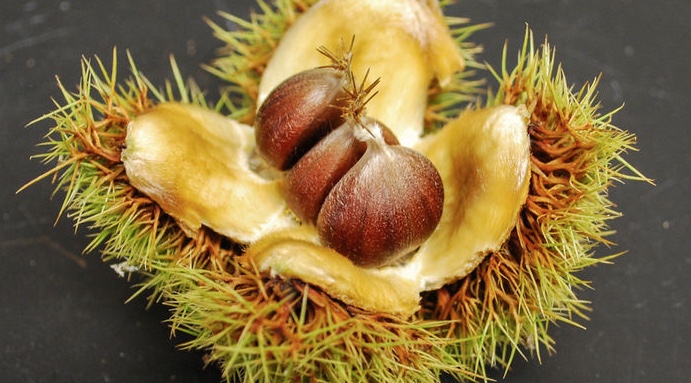
Fall 2021 Newsletter Has Many Interesting Articles!
The Fall 2021 issue of The Bur, the Virginia Chapter's semi-annual newsletter, contains many interesting updates on our progress toward reestablishing the American chestnut to our forests. You can download it here. .
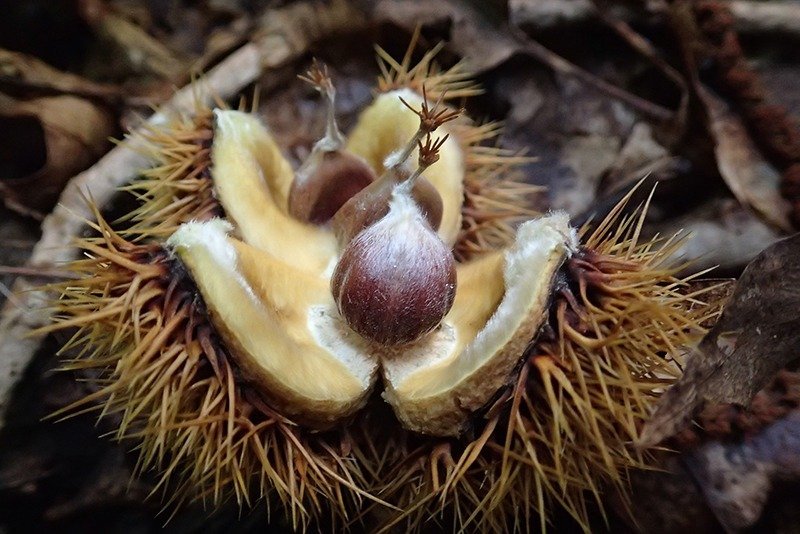
Spring Issue of The Bur Published
The Spring 2021 issue of The Bur is now available for downloading as a pdf file. This 12-page issue is packed with exciting news about our progress in re-establishing the American chestnut.
Spring 2020 Newsletter Available
The Spring 2020 issue of The Bur, the newsletter of the Virginia Chapter of The American Chestnut Foundation, is now available for viewing on line or downloading at this link.