
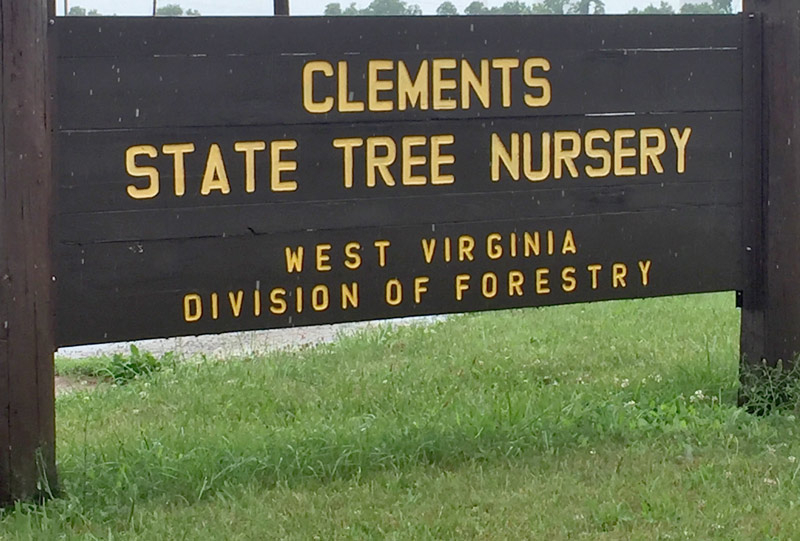
The American Chestnut Trees at Clements Tree Nursery
In September 2026, plans were announced for the development of a 580-acre high-impact data center facility in West Columbia, WV. Potentially affected by this development sits a 200-tree American chestnut orchard with a rich and collaborative past, located at the former Clements State Tree Nursery in West Columbia.
The American Chestnut Foundation (TACF) is deeply grateful to the State of West Virginia, TACF’s WV Chapter, and other collaborators who have supported chestnut restoration at the former Clements Tree Nursery for nearly 50 years. The trees at Clements represent decades of dedication by researchers, volunteers, and members of the West Virginia community. We recognize the value of this orchard and how much it means to the people who have cared for it and benefited from its continued production of chestnuts.
We would certainly be saddened if we were to lose the orchard and the annual harvest of nuts it provides, but we do not yet know if that will happen. This story is still unfolding. Whatever the outcome, it is worth noting that genetic material from these trees has been incorporated into our restoration efforts, and we will work with our partners to ensure that this important genetic legacy continues to contribute to future generations of American chestnuts.
TACF’s mission is to restore self-sustaining populations of chestnut across its native range. That requires building genetically diverse populations capable of surviving, reproducing, and thriving in eastern forests. Every orchard, every planting, and every partnership contributes to that larger effort.
While the loss of any tree or forest is difficult to reconcile, TACF’s restoration work is designed to endure beyond any individual site. We remain grateful for West Virginia’s longstanding partnership and commitment to ensuring that the contributions of the Clements orchard benefit American chestnut restoration for generations to come.
History of the Chestnut Trees at Clements
The American chestnut trees at the former Clements nursery were planted in 1976 by the late Dr. Gary Griffin of Virginia Tech, the late Dr. John Elkins of Concord University, and the late Bruce Givens of the WV Department of Agriculture. In the mid-1970s, they scoured forests in West Virginia, Virginia, and Maryland for large, surviving American chestnut trees, hypothesizing that they may have some inherent resistance to chestnut blight (Cryphonectria parasitica). Nuts from their search were planted in rows adjacent to the nursery beds at Clements. While many of those trees died within the first few years, demonstrating a lack of sufficient resistance, some survived and are now 60 feet tall. Nuts from the trees planted in 1976 were used to initiate a second chestnut orchard in the 1990s. It is the trees in the second orchard from which the WV Chapter has harvested nuts for more than a decade, distributing the seeds/seedlings throughout West Virginia.
About TACF’s Research
TACF is developing American chestnut trees with sufficient resistance to two deadly diseases: Cryphonectria parasiticia (chestnut blight) and Phytophthora cinnamomi (root rot or black ink disease). Recurrent genomic selection (RGS) is the Foundation’s main strategy for breeding resistance into American chestnut. RGS is a proven, science-based method already used in major commercial forestry species that combines field testing, genomic analysis, and accelerated breeding cycles. Learn more here.