
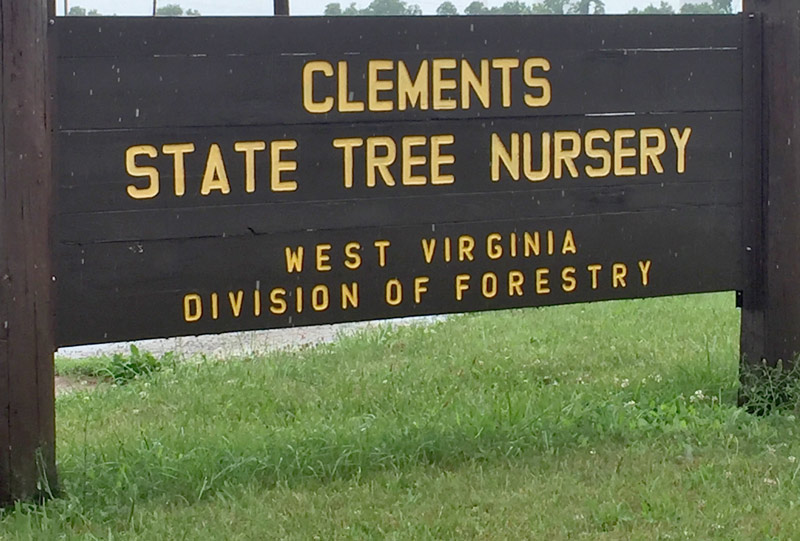
American Chestnut Orchards at the Former Clements State Tree Nursery Site
Latest Update: 10.16.26
The American Chestnut Foundation (TACF) continues to monitor developments concerning the chestnut orchards at the former Clements State Tree Nursery site in West Virginia. As discussions about the future of the property continue, we are committed to sharing information as it becomes available, supporting our WV Chapter, and advocating for the best possible outcome for the trees and the future of American chestnut restoration in the state.
TACF recommends an independent evaluation of any proposed effort to relocate the chestnut trees at the former Clements site. The recommendation to relocate the trees originated with the West Virginia Governor’s Office. Although TACF has extensive expertise in American chestnut research, breeding, and restoration, we are not aware of documented examples of successfully relocating mature American chestnut trees. In the limited cases involving comparable trees, such as oaks, relocation is costly and has required years of preparation and follow-up care. An independent evaluation would help determine the feasibility, risks, and potential requirements of any proposed relocation.
What We Know
- Early information indicated that the chestnut orchards were part of the acreage purchased by Project Tamarack. We have since learned that this is not the case. Nscale, a vertically integrated AI infrastructure company, is negotiating with the State of West Virginia to purchase the acreage where the trees are located.
- Several species of Castanea are represented at the site, including Castanea dentata (American chestnut). However, the site is not a dedicated American chestnut germplasm conservation orchard, nor does it contain a naturally occurring or “wild” population. It is a planted, managed orchard that has served important research, breeding, and seed production purposes.
- TACF fully supports our WV Chapter and is working alongside its leaders to evaluate the situation, make informed decisions, and determine next steps.
What We Don’t Know
- Because TACF and the WV Chapter do not own the land, our ability to influence decisions and obtain information is limited. The situation continues to evolve, and we do not yet know what the final outcome will be for the trees. We are working daily with our Chapter, partners, and others to identify the best possible resolution.
TACF is working to ensure the WV Chapter has access to chestnut seeds to support its ongoing work. This includes assistance from other TACF chapters and our Meadowview Research Farms.
TACF is committed to approaching this situation thoughtfully, advocating for informed decisions, and supporting our WV Chapter. While we cannot predict outcomes, we remain focused on protecting the progress made in American chestnut restoration and ensuring that the work to bring this iconic tree back to our forests continues.
10.10.26 Update:
Good news! We now have verification that the Clements site is a separate property and is not part of the project’s development site.
From the developer’s website: “The former Clements State Tree Nursery is a separate property and is not part of the Project Tamarack development site. Project Tamarack has no ownership, control, or management responsibility for the property. Questions regarding the chestnut grove, the former nursery, or the property’s management should be directed to the West Virginia Division of Forestry, which operated the facility prior to its closure in 2021.” Visit the developer’s website for more information regarding their project.
10.9.26 Original Post:
In September 2026, plans were announced for the development of a 580-acre high-impact data center facility in West Columbia, WV. Potentially affected by this development sits a 200-tree American chestnut orchard with a rich and collaborative past, located at the former Clements State Tree Nursery in West Columbia.
The American Chestnut Foundation (TACF) is deeply grateful to the State of West Virginia, TACF’s WV Chapter, and other collaborators who have supported chestnut restoration at the former Clements Tree Nursery for nearly 50 years. The trees at Clements represent decades of dedication by researchers, volunteers, and members of the West Virginia community. We recognize the value of this orchard and how much it means to the people who have cared for it and benefited from its continued production of chestnuts.
We would certainly be saddened if we were to lose the orchard and the annual harvest of nuts it provides, but we do not yet know if that will happen. This story is still unfolding. Whatever the outcome, it is worth noting that genetic material from these trees has been incorporated into our restoration efforts, and we will work with our partners to ensure that this important genetic legacy continues to contribute to future generations of American chestnuts.
TACF’s mission is to restore self-sustaining populations of chestnut across its native range. That requires building genetically diverse populations capable of surviving, reproducing, and thriving in eastern forests. Every orchard, every planting, and every partnership contributes to that larger effort.
While the loss of any tree or forest is difficult to reconcile, TACF’s restoration work is designed to endure beyond any individual site. We remain grateful for West Virginia’s longstanding partnership and commitment to ensuring that the contributions of the Clements orchard benefit American chestnut restoration for generations to come.
History of the Chestnut Trees at Clements
The American chestnut trees at the former Clements nursery were planted in 1976 by the late Dr. Gary Griffin of Virginia Tech, the late Dr. John Elkins of Concord University, and the late Bruce Givens of the WV Department of Agriculture. In the mid-1970s, they scoured forests in West Virginia, Virginia, and Maryland for large, surviving American chestnut trees, hypothesizing that they may have some inherent resistance to chestnut blight (Cryphonectria parasitica). Nuts from their search were planted in rows adjacent to the nursery beds at Clements. While many of those trees died within the first few years, demonstrating a lack of sufficient resistance, some survived and are now 60 feet tall. Nuts from the trees planted in 1976 were used to initiate a second chestnut orchard in the 1990s. It is the trees in the second orchard from which the WV Chapter has harvested nuts for more than a decade, distributing the seeds/seedlings throughout West Virginia.
About TACF’s Research
TACF is developing American chestnut trees with sufficient resistance to two deadly diseases: Cryphonectria parasiticia (chestnut blight) and Phytophthora cinnamomi (root rot or black ink disease). Recurrent genomic selection (RGS) is the Foundation’s main strategy for breeding resistance into American chestnut. RGS is a proven, science-based method already used in major commercial forestry species that combines field testing, genomic analysis, and accelerated breeding cycles. Learn more here.