Carolinas News

Blight Inoculations on Hybrid Chestnuts – Chestnut Return Farm, Seneca, SC, April 17, 2025

Today, several hybrid chestnut trees were inoculated with a fungal culture of Cryphonectria parasitica, which causes chestnut blight, to evaluate the resistance of each tree, at Dr. Joe James’s Chestnut Return Farm. Jamie Van Clief, TACF’s Southern Regional Science Coordinator, directed volunteers for this important work.  Clemson professor Dr. Haiying Liang and her students, Roger and Sky, participated.  Also, Katie Biggert, from the South Carolina Forestry Commission inoculated trees.  Peggy MacDonald, NC/SC Chapter President was also present to help.
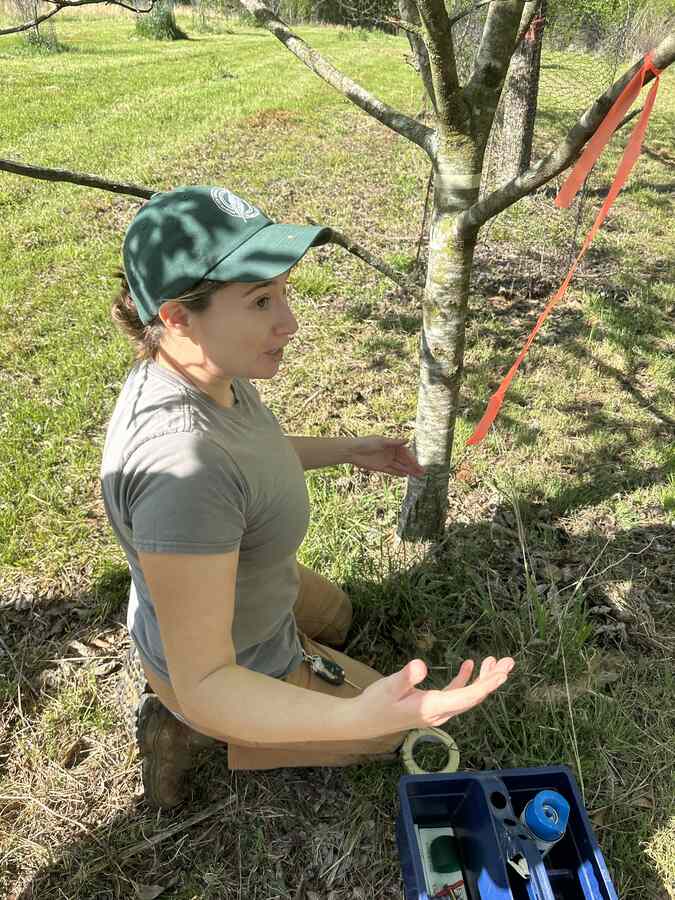
Jamie demonstrated the method of inoculating trees with the fungus.
Jamie demonstrated the method of inoculating trees with the fungus.


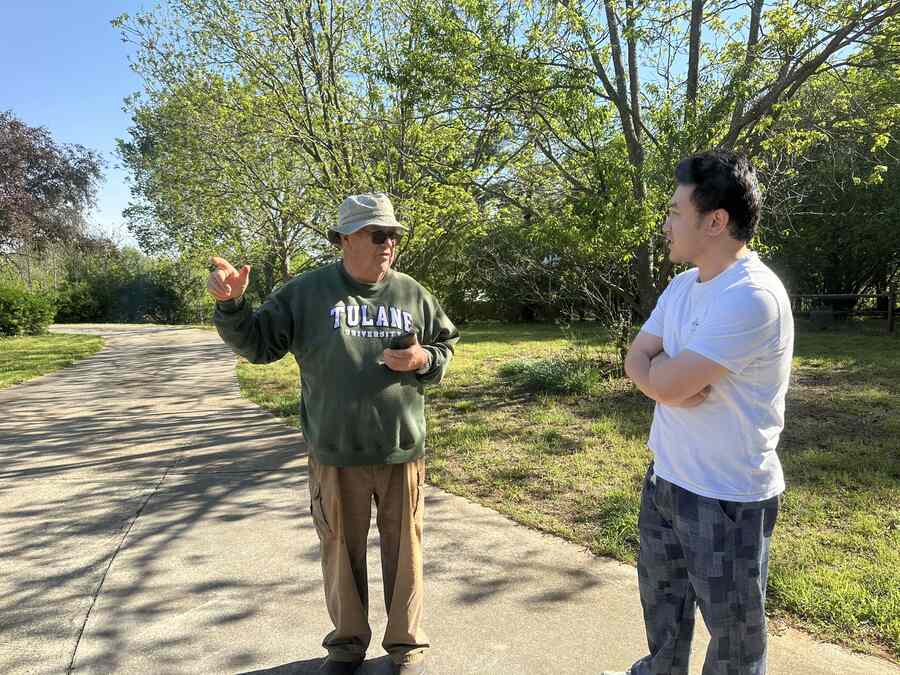
Dr. Joe James with Clemson student Roger.
Dr. Joe James with Clemson student Roger.


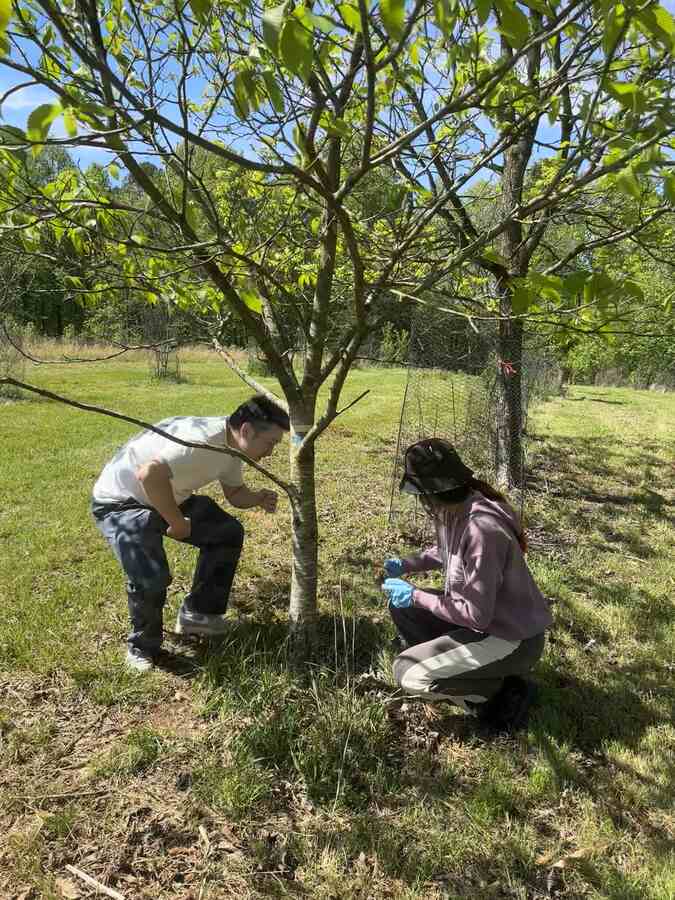
Clemson students Roger and Sky inoculating hybrid chestnut trees.
Clemson students Roger and Sky inoculating hybrid chestnut trees.


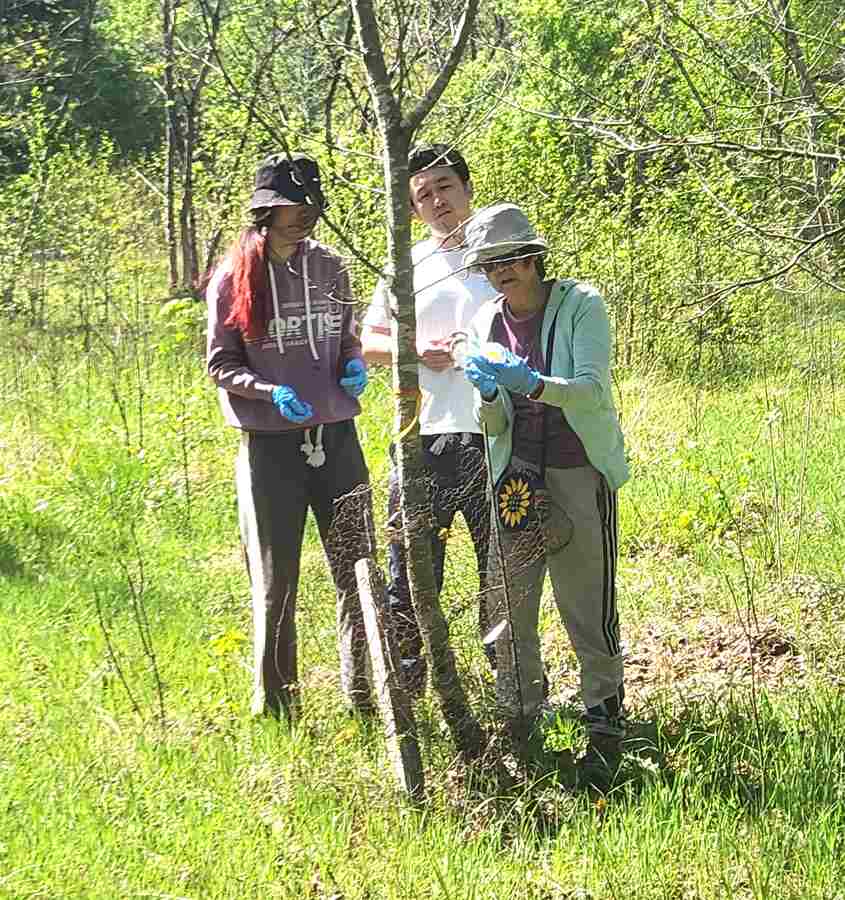
Dr. Haiying Liang inoculating chestnut hybrids with Sky and Roger. This was a great hands-on experience for her students,

Dr. Haiying Liang inoculating chestnut hybrids with Sky and Roger. This was a great hands-on experience for her students.
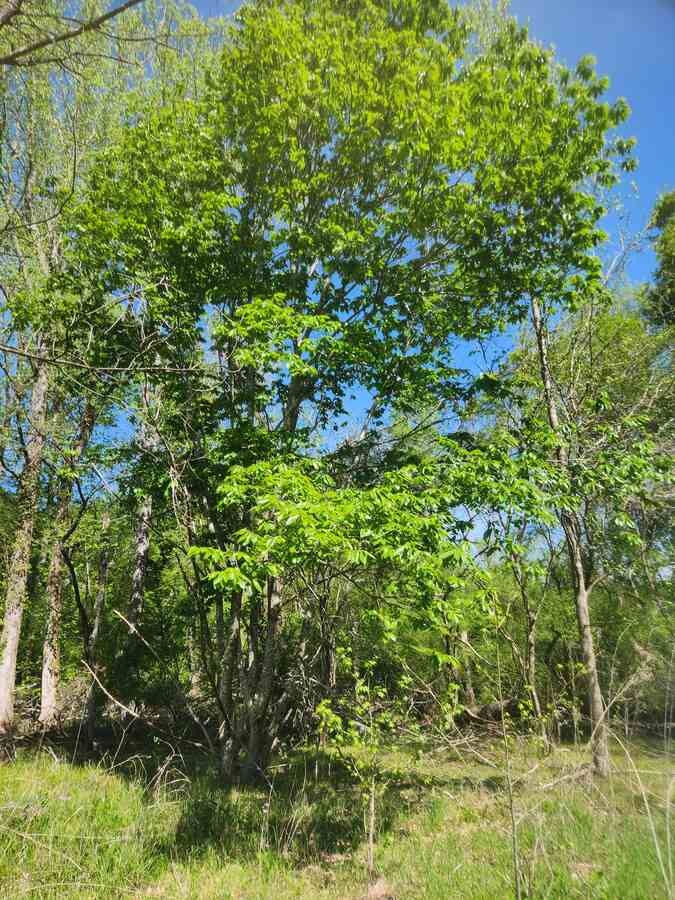
 

A healthy F1 American/Chinese hybrid chestnut at the Chestnut Return Farm.
A healthy F1 American/Chinese hybrid chestnut at the Chestnut Return Farm.


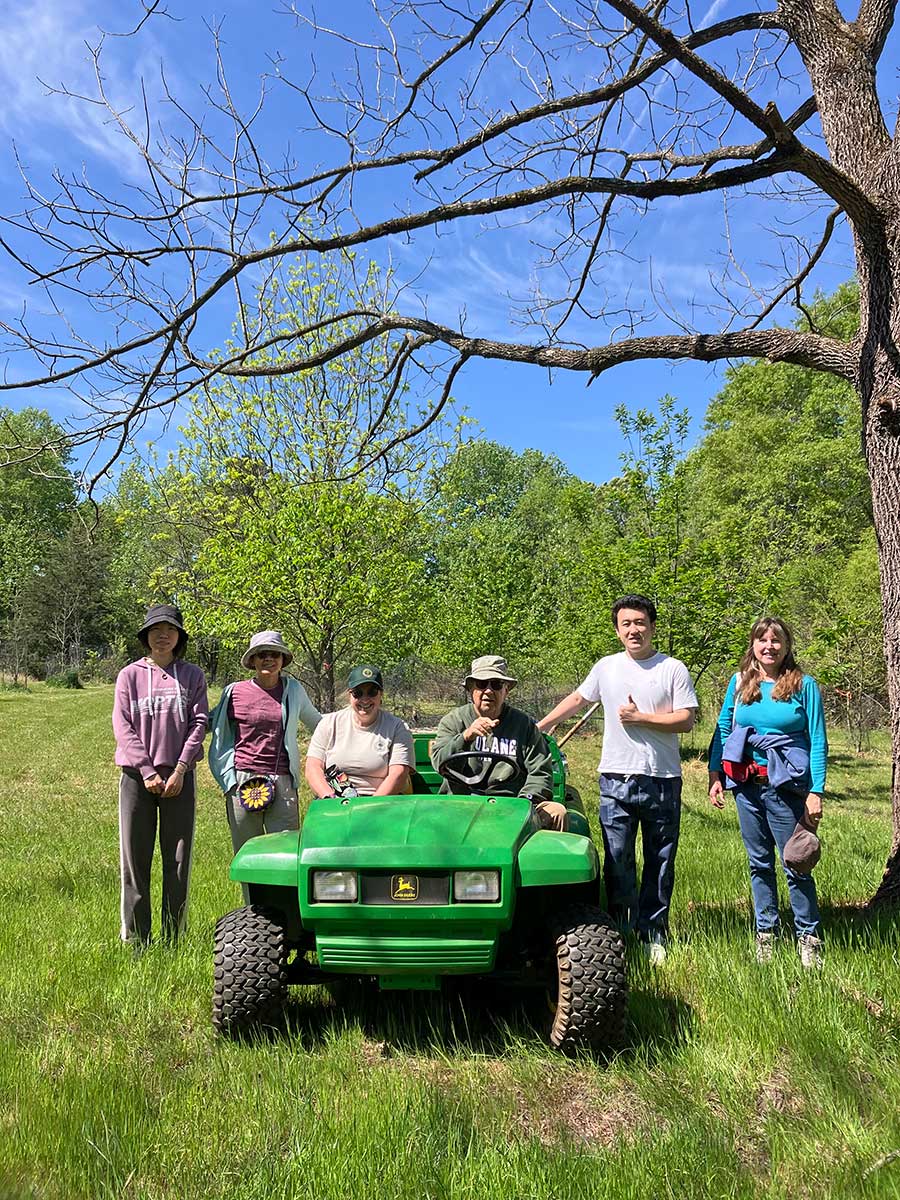
Dr. Joe James with the volunteers on a beautiful spring day.

Dr. Joe James with the volunteers on a beautiful spring day.

 

Carolinas News Chapter Menu

National Facebook

Comments Box SVG iconsUsed for the like, share, comment, and reaction icons

Amazing work being done by the West Virginia Chapter! ... See MoreSee Less

Amazing work being done by the West Virginia Chapter!Image attachmentImage attachment+4Image attachment

2 CommentsComment on Facebook

Why were they planted so close together?

Thank you!

Thanks for educating people on our favorite tree! ... See MoreSee Less

We love helping students get excited about, and involved in, the American chestnut tree! ... See MoreSee Less

We love helping students get excited about, and involved in, the American chestnut tree!Image attachmentImage attachment+6Image attachment

Save this for when you plant your chestnuts! All you need is a deep pot, well-draining soil, and proper seed orientation for success. 🌱

Want to learn more about growing chestnuts? Visit this link to learn more: tacf.org/growing-chestnuts/

#planting #growing #americanchestnut #plantingseason #explore
... See MoreSee Less

7 CommentsComment on Facebook

I appreciate the effort, but you’re just planting a tree that will die young.

Another way is put out a bunch of chestnuts, walnuts, acorns etc and let the squirrels plant them (they won't eat them all)!

Where do you get the American chestnuts?

View more comments

I highly recommend checking out this article by Robert Foster, in which he reminisces about the time he helped save a large, standing American chestnut tree. He also shares an older article that tells the full story of the tree and the effort to preserve it. The original piece, published in American Forests magazine, is titled “Saving Something of Value” by Herbert E. McLean and is copied below his introduction.

Click the following link to check it out: rfoster.substack.com/p/one-big-tree

#americanchestnut #nature #explore #fighttosave #story
... See MoreSee Less

I highly recommend checking out this article by Robert Foster, in which he reminisces about the time he helped save a large, standing American chestnut tree. He also shares an older article that tells the full story of the tree and the effort to preserve it. The original piece, published in American Forests magazine, is titled “Saving Something of Value” by Herbert E. McLean and is copied below his introduction. Click the following link to check it out: https://rfoster.substack.com/p/one-big-tree #americanchestnut #nature #explore #fighttosave #story
Load more