
A Bittersweet Before and After Story—large and historically significant American chestnut trees find a new home at the National Museum of Forest Service History.
The story of the widely revered American chestnut stand in Wisconsin is one of hope, stewardship, and perseverance. What began with just two chestnut trees planted in the late 1800s grew into a remarkably large stand that inspired chestnut enthusiasts across the country.
Unfortunately, the trees were not destined to remain the disease-free exceptions their stewards hoped for. In 2020, following the seemingly inevitable appearance of chestnut blight, part of the stand was harvested in an effort to preserve its legacy. (Read that story here.)
As blight plagued the remaining trees, an opportunity arose for them to inspire in new ways—through an immersive display at the National Museum of Forest Service History. While we mourn the loss of these historic giants, this tribute serves as both a salve and a teacher. The following excerpt, from an upcoming issue of Chestnut magazine, explores the thoughtful decisions that launched this next chapter in the trees’ story.
“Tim contacted Wayne Helming, who, with his brothers, own the remaining American chestnuts (and now mixed hardwood). That 60-acre stand, located near Tomah, Wisconsin, had seeded in naturally from two American chestnut trees planted in the late 1800s on an adjacent farm, well outside of the natural range for the species. Wayne was sad to report that blight had made its way to the remaining American chestnuts that were in various stages of death and dying. His LOVE is this stand of American chestnut that he and his whole family had nurtured and watched grow for decades. He was conflicted about whether to harvest the remaining trees but was intrigued with the Museum’s mission and goal of the Center and the chance for these trees to leave their legacy, tell their story, and welcome visitors to the Center. Rather bittersweet, this was the best-case scenario. Tim purchased the trees from the Helmings; with his crew, marked and harvested the trees and loaded them on their truck (whole log); transported them to his yard in Wabeno, Wisconsin; and he DONATED the trees to the Museum.”
Excerpt above is courtesy of our contributing author, Barbara Tormoehlen, who serves on the board of TACF as well as NMFSH.
Photos of the stunning exhibit’s grand opening are courtesy of TACF President and CEO Michael Goergen.
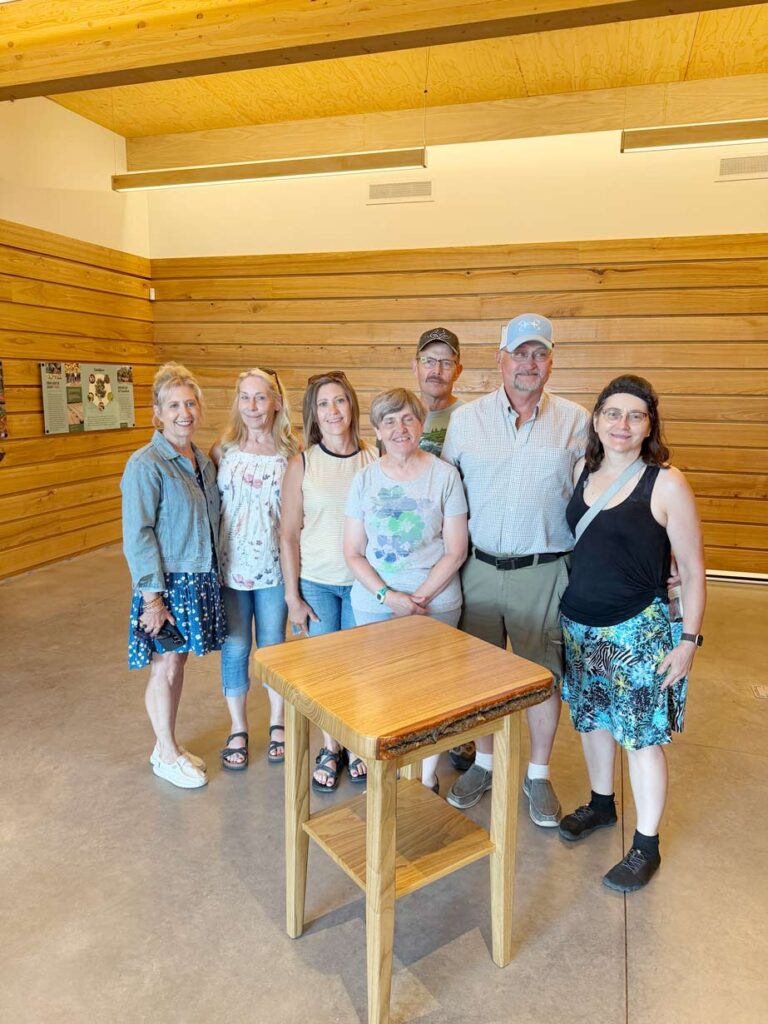
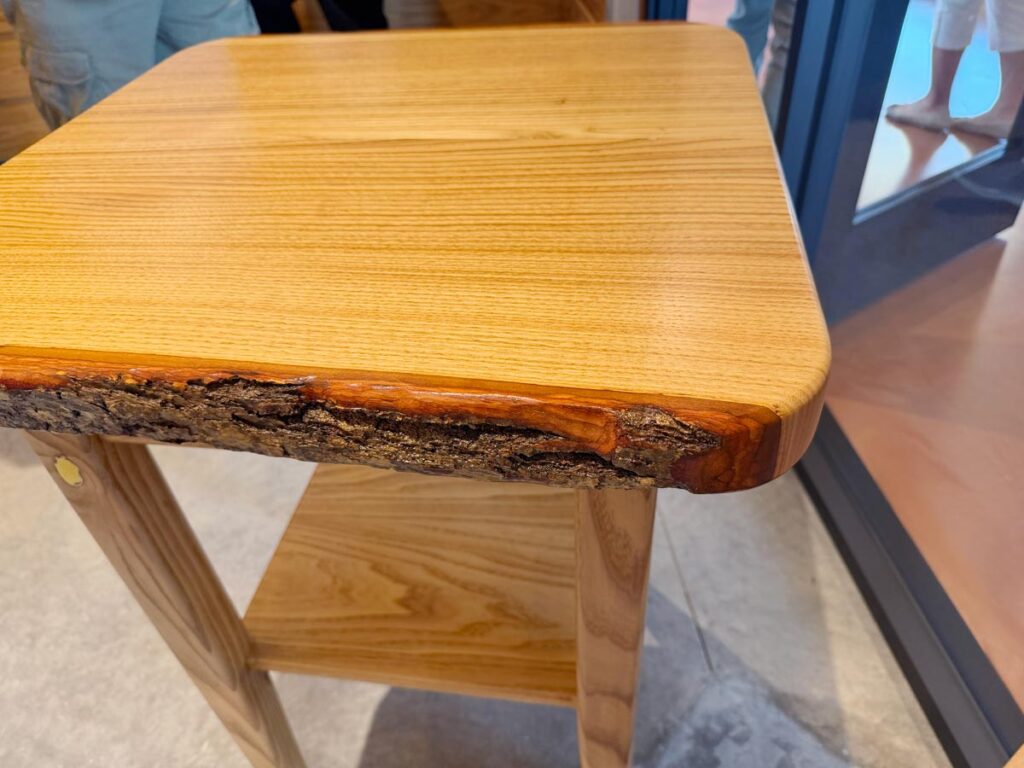
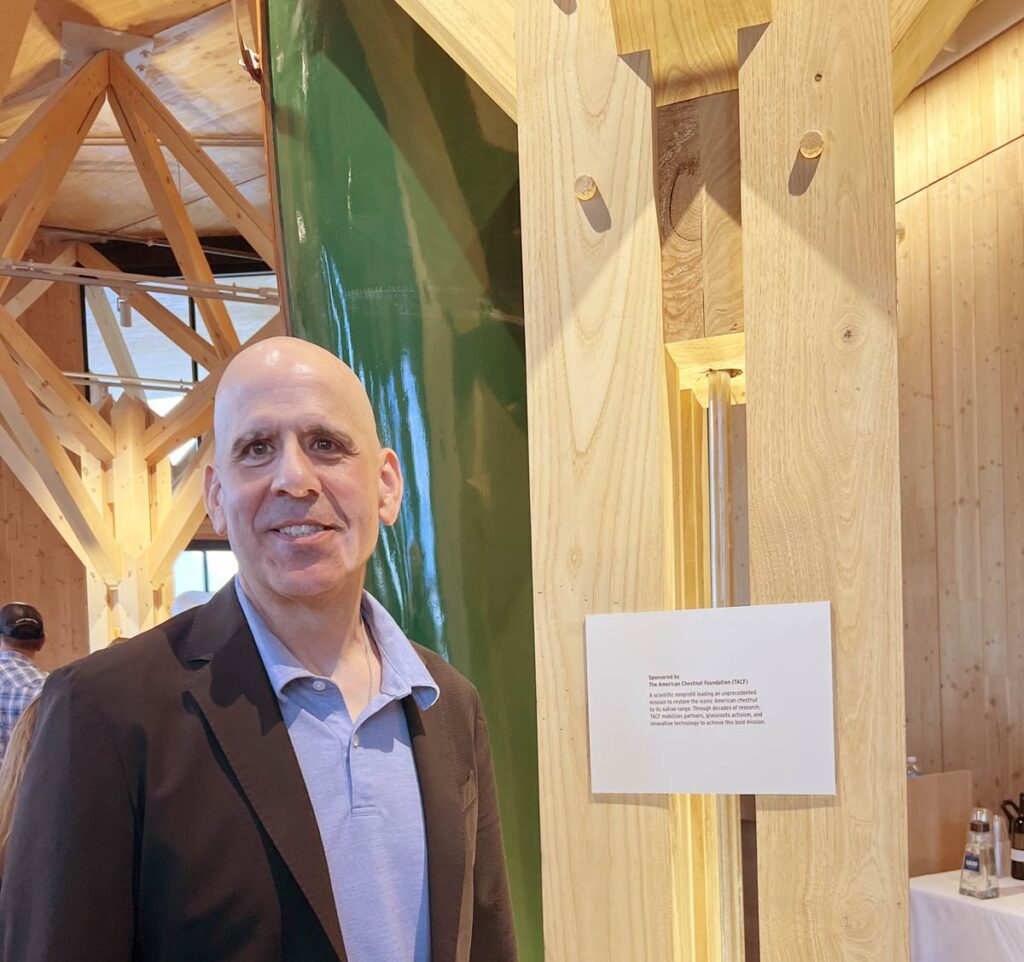
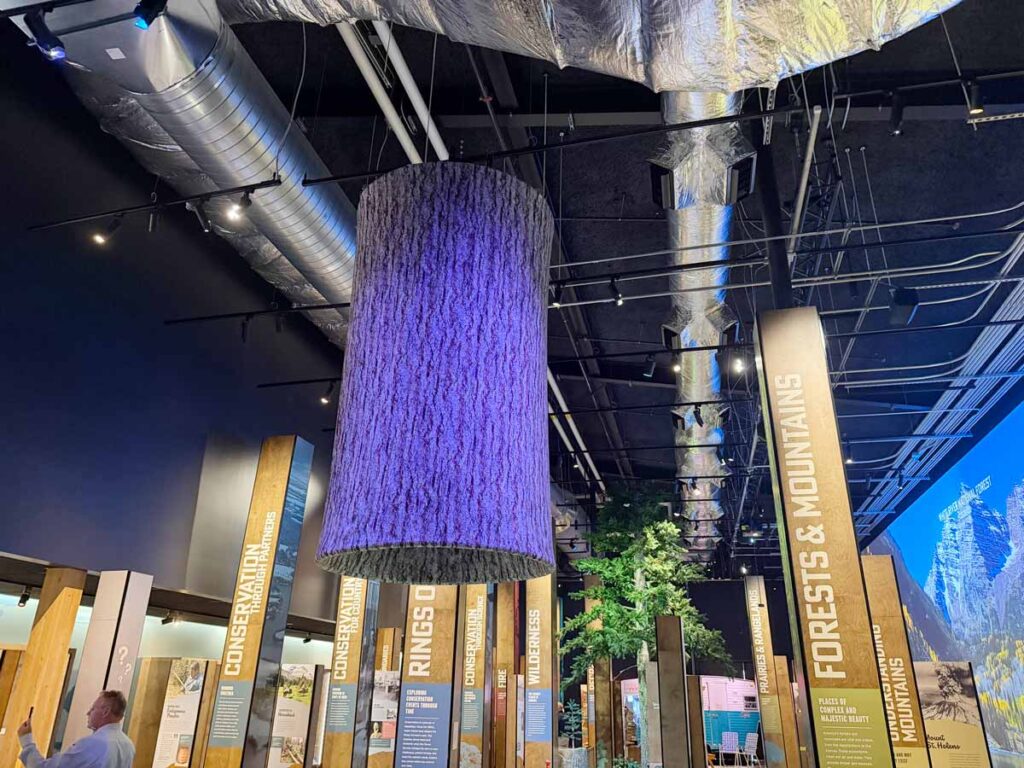
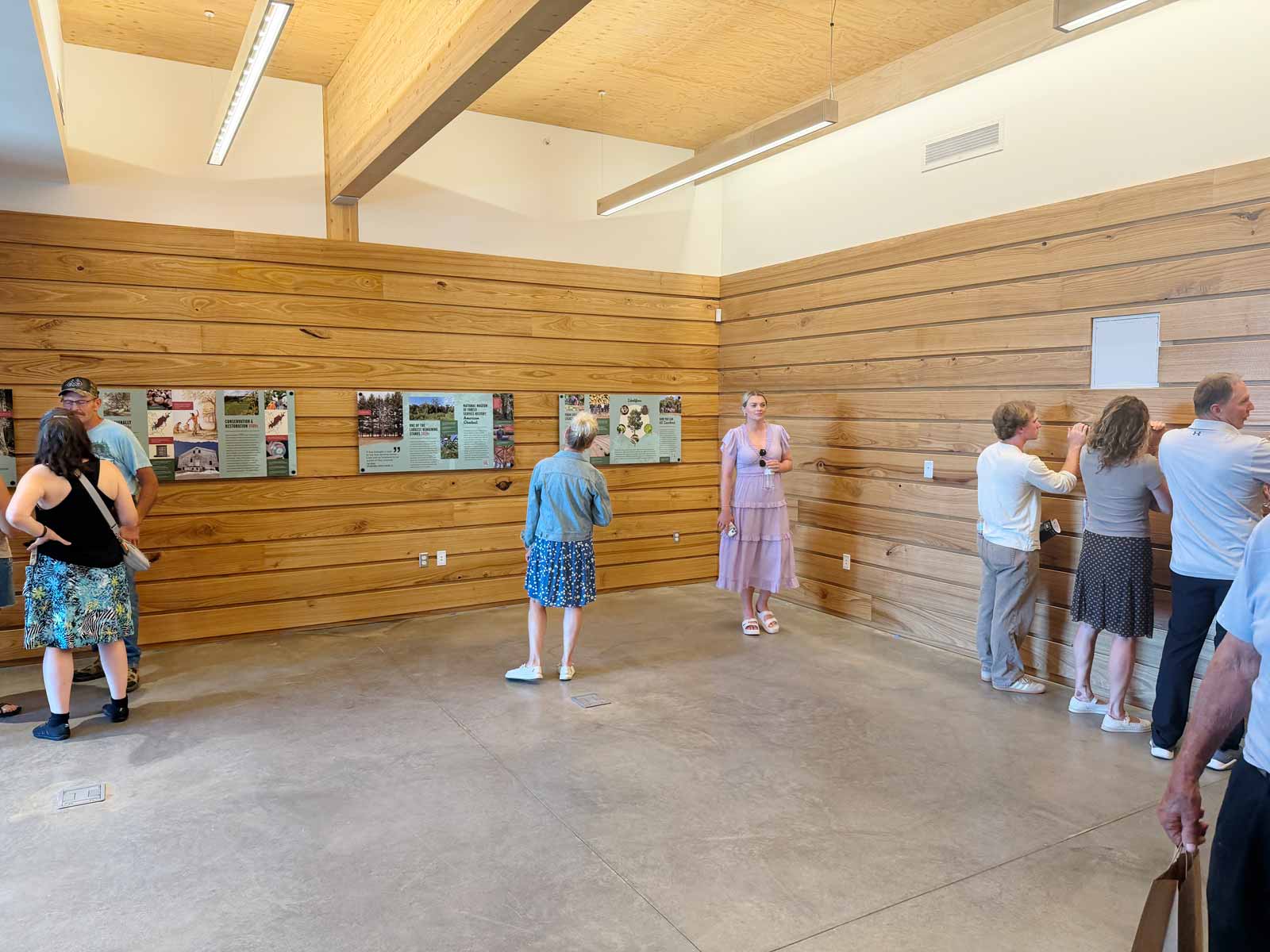
The American Chestnut Foundation (TACF) is proud to have played a key role in the creation of this very special exhibit. Read the full article in the next issue of Chestnut magazine to learn more about our part!
This feature is just one of many inside our award-winning publication, which highlights the inspiring researchers, volunteers, and partners dedicated to restoring this iconic species. To receive the next issue of Chestnut and unlock exclusive restoration updates, become a member of The American Chestnut Foundation today!