Virginia News

Wild Surviving Chestnut Found in Prince William Forest Park

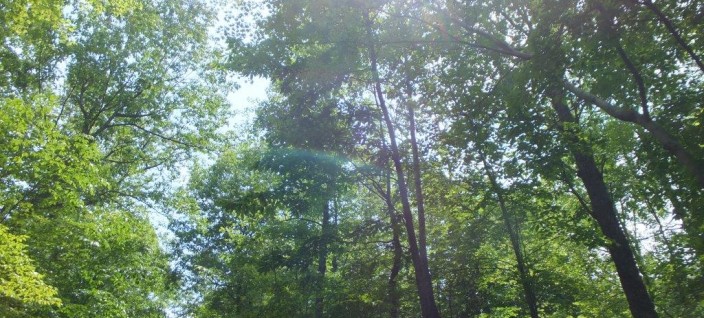
Finding large, wild, surviving American chestnuts is always exciting, but to find a healthy one below the fall line in Virginia is both exciting and special.  But there it is, right next to a trail in Prince William Forest Park.

Prince William Forest Park preserves approximately 15,000 acres of piedmont forest covering a major portion of the Quantico Creek watershed. The park is the third largest unit of the National Park System in Virginia. It is located at the convergence of the northernmost range of many southern species and the southernmost range of many northern species; and at the convergence of the coastal plain and piedmont geologic zones, yielding a huge diversity of plant and animal life in the shadow of the D.C. metropolitan area.   It was once loaded with chestnut trees, but until this discovery, no one knew whether any still survived.

VATACF has applied for a research permit to release this tree.  If we are successful, the tree might produce pollen next year or the year after, and if we can keep it healthy, might produce burs the year following.  Then the tree can be bred to a blight-resistant hybrid to begin a line of blight-resistant American chestnuts suitable for reforesting the forests in the Quantico Creek watershed.

Nickname:  the Petersen Tree
Height:  75 feet
Diameter at breast height:  18.8 cm
Location:  Taylor Farm Road

Virginia News Chapter Menu

National Facebook

Comments Box SVG iconsUsed for the like, share, comment, and reaction icons

At Heirloom Table Company, nothing is wasted and every table tells a story.
This clip showcases how salvaged American chestnut wood, reclaimed from old New England buildings, is transformed into handcrafted tables designed to become family heirlooms.

The full video takes a deeper look at the process and then introduces another local artisan who handcrafts Native‑style flutes. While the flute‑making isn’t connected to chestnut wood, it’s a beautiful continuation of the theme: preserving craftsmanship, skill, and tradition.

Watch the full video here: www.wcvb.com/article/crafting-heirlooms-and-melodies-in-new-england/70794861

#news #americanchestnut #wood #trees #explorepage
... See MoreSee Less

We are beginning to see catkins on chestnut trees in our high-light growth chamber! By growing our chestnuts under 16 hours of high-intensity light, we’re seeing incredible results, including pollen production in less than 2 years. In the field, pollen and female flower production typically takes 5–7 years. This acceleration allows us to shorten breeding cycles and speed up tree generations, helping us select, improve, and scale better chestnut genetics much faster than traditional timelines.

#AmericanChestnut #RestorationInProgress #ChestnutResearch #ForestRestoration #MeadowviewResearchFarms #ConservationScience
... See MoreSee Less

6 CommentsComment on Facebook

Have you sent out the seeds for seed-level members? I was supposed to get six of them; and in the past, they have always come in March -- and today is the 27th.

Is it possible to buy pollen from American chestnuts?

It is good to hear of the accelerated time line. Are these trees all genotyped?

View more comments

If you’ve ever wondered why we keep planting wild‑type American chestnuts, even though they eventually succumb to blight, this is why.

Any other questions we can answer? Drop them in the comments!

#reels #explorepage #americanchestnut #ecology #nature
... See MoreSee Less

16 CommentsComment on Facebook

The American Chestnut Foundation was WRONG to make the incredibly short-sighted and completely unscientific decision to withdraw its support from SUNY ESF's Darling Project, the ONLY project breeding TRUE American Chestnuts. SUNY ESF's trees are transgenic, containing a gene from wheat (I believe) that enables the tree to resist the blight. Yes, they're transgenic, they have that one additional gene, but they're AMERICAN CHESTNUTS. The American Chestnut Foundation has, instead, resorted to breeding HYBRID trees that are NOT American Chestnuts, they are hybrid American / Chinese Chestnuts. The Chinese Chestnut is resistant to the blight because it evolved with the blight over generations, but by hybridizing a tree you lose the pure genetics. Think of breeding two different dog breeds together, the resulting puppy is the same as neither of the parents, but contains a combination of both. A labradoodle is neither a Labrador nor a poodle, it is a labradoodle. This is the WRONG path to bring back the American Chestnut because the hybrid trees AREN'T American Chestnuts. The foundation should change its name to either The American / Chinese Chestnut Foundation or the Hybrid Chestnut Foundation - seem silly? It is! Or, they could do the sensible thing and support the ONLY project bringing the American Chestnut back, SUNY ESF's Darling Project.

Is it true they're safe out here in the west? I'd plant some.

I understand why you keep planting wild type...you should... and use your RGS on pure Americans not the hybrids( Dr. Westbrook). What I don't understand is why you keep growing the hybrids and fighting off Molissima after all these years of consistent failure Mr Goergen?

View more comments

Rogueing has officially begun! Late last year, Meadowview Research Farm staff selected the best trees in our 2018 progeny test to be genetically tested this year, and now our Director of Land Management, Dan McKinnon, is removing the trees that weren’t selected. The 2017 progeny test is also being cleared to make way for future plantings. Removing undesirable trees on a regular basis provides space for the trees of tomorrow.

#AmericanChestnut #RestorationInProgress #ChestnutResearch #ForestRestoration #MeadowviewResearchFarms #ConservationScience
... See MoreSee Less

3 CommentsComment on Facebook

if you dug them I am sure some of us could plant them.. i mean if there is a chance they make it

Can't you replant the "undesirable " trees else where as they're important to the earth breathing.

Thanks, Dan!

The PA/NJ Chapter of The American Chestnut Foundation is having a Spring Growers meeting on March 28, 2026 from 9:30am - 3:30pm

Expert speakers: Michael Goergen, Allen Dietrich-Ward, Noah Vincent, and Lake Graboski

$30 ticket price includes breakfast and lunch!

All are welcome! Learn more at PANJTACF.org

It will be held at The Centennial Barn at Fort Hunter Mansion
5395 N. Front St, Harrisburg, PA 17110

#americanchestnut #meeting #getinvolved #nonprofit #explorepage
... See MoreSee Less

The PA/NJ Chapter of The American Chestnut Foundation is having a Spring Growers meeting on March 28, 2026 from 9:30am - 3:30pmExpert speakers: Michael Goergen, Allen Dietrich-Ward, Noah Vincent, and Lake Graboski$30 ticket price includes breakfast and lunch!All are welcome! Learn more at PANJTACF.org It will be held at The Centennial Barn at Fort Hunter Mansion5395 N. Front St, Harrisburg, PA 17110#americanchestnut #meeting #getinvolved #nonprofit #explorepage

1 CommentComment on Facebook

Sorry I will miss this! I have to be at our SAWN-PA forest workshop.

Load more