

Indiana News
Indiana Karst Conservancy Planting
Want to plant some chestnuts with us this spring? We have set the date for the Indiana Karst Conservancy planting – it’s April 16th! More information to come as we get closer to that date, if you are interested please contact Ben Finegan for more details.
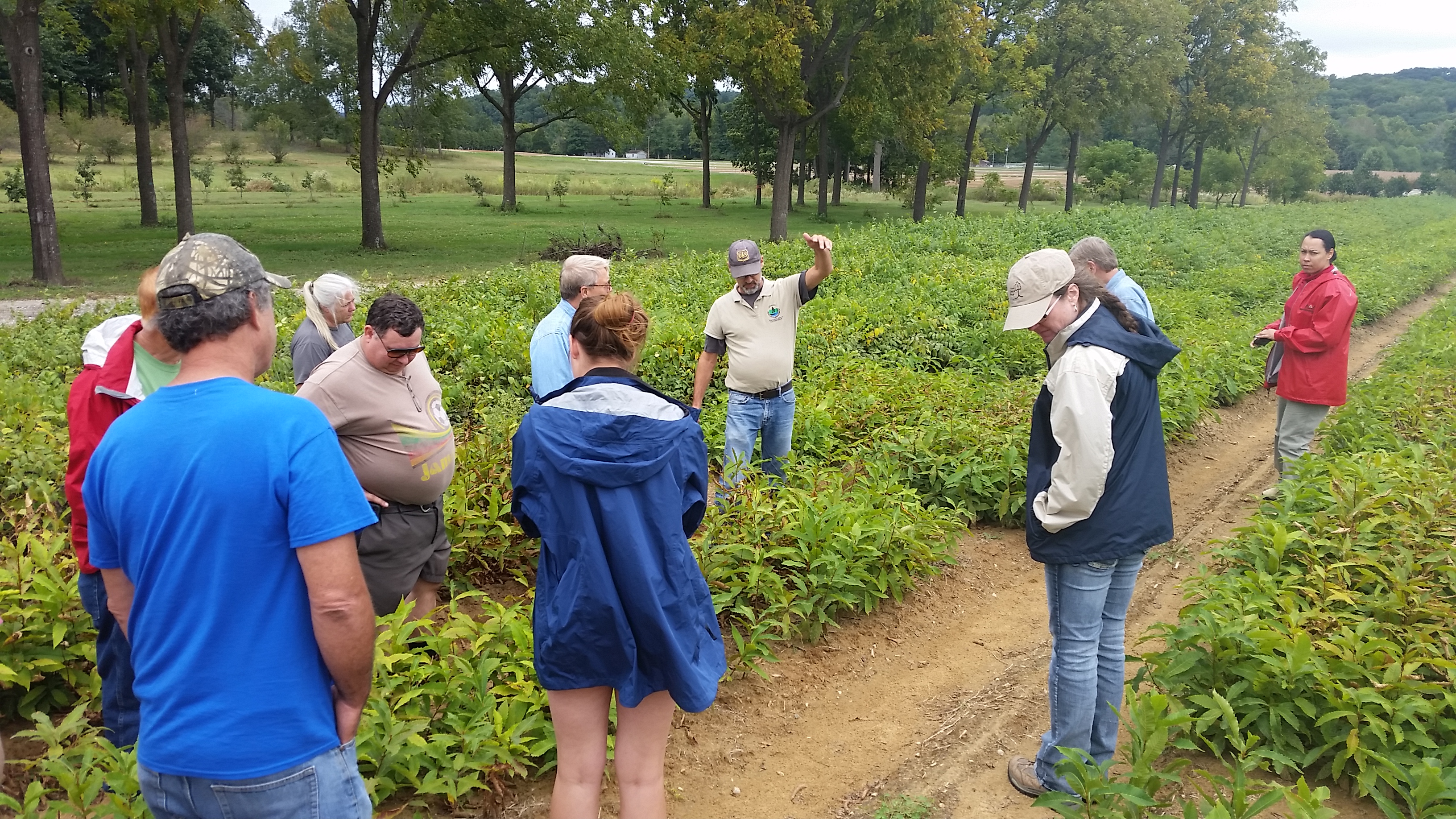
Indiana Chapter in the December Sprout
The meeting was hosted by Carroll Ritter, the Sycamore Land Trust Environmental Education Coordinator, and the Southern Hills Restoration Branch. Members discussed the important of restoring the American chestnut while enjoying a tasty lunch and scenic views. They...
Spring Plantings Underway for the Week of May 5th!
IN TACF will hit the road Tuesday, May 6th to get the Harrison Crawford (HCSF) and Jackson Washington (JWSF) Indiana State Forest chestnut progeny plantings installed. A progeny planting is a test planting to see how well the Restoration trees survive in the wild. We...
Chestnuts Come to Indiana State Forests
The Indiana Chapter of the American Chestnut Foundation will be planting Restoration 1.0 progeny tests in two of Indiana’s state forests. What are Restoration 1.0 progeny tests, you ask? “Restoration 1.0″ refers to the product of the past 30 years of backcross...
Indiana Chapter Menu
National Facebook

Several chestnut enthusiasts recently had the opportunity to visit John's Creek's planting in Virginia. One of the most memorable sights was the claw marks left by black bears foraging for chestnuts as they prepare for winter, a testament to the planting's success and its growing role in supporting wildlife. The visit took place during this year's NE2333 annual meeting.
#AmericanChestnut #ChestnutRestoration #ForestHealth #WildlifeConservation #HealthyForests

2 CommentsComment on Facebook
Hopefully the damaged bark does not serve as a corridor for the blight to enter living tissue.
Have seen a number of true wild, pure American chestnut trees damaged by black bear. These trees are large enough to survive multiple years of “attacks” by black bear.
This excellent article takes a deep dive into the history of the American chestnut, the science driving restoration efforts, and the communities helping make recovery possible. Be sure to read the perspectives shared by TACF Director of Science Jared Westbrook, Board Member Jim Searing, and PA/NJ Chapter member Mike Aucott. 🌳🌰
Read the article: rivertownsmagazine.com/stories/the-return-of-the-american-chestnut-tree,146154
#americanchestnut #forestry #ForestRestoration #citizenscience #conservation
44 CommentsComment on Facebook
Thanks for sharing! This was a great article and we're glad to be part of the restoration efforts.
I have acreage, but no idea how to purchase these.
I will be pleased if a 100 ft, tall tree with a sweet chestnut can be developed from any of these approaches.
The 2026 American Chestnut Symposium is taking shape! The current schedule is live, featuring expert presentations, panel discussions, restoration updates, networking opportunities, and field tours designed to bring our community together around the future of American chestnut restoration
Have research, restoration work, or a project to share? Consider participating in the poster session and connecting with fellow scientists, volunteers, conservation professionals, and chestnut enthusiasts.
Learn more, explore the schedule, and register today at tacf.org/2026-american-chestnut-symposium/
#ForestRestoration #conservation #forestry #nativespecies #americanchestnut
1 CommentComment on Facebook
I will do my best to make it!
What a difference a neighbor can make. 🌳🌳 Our Director of Communications, Jules Smith, recently visited a 10+ year-old hybrid American chestnut covered in burs. Just out of frame is another hybrid chestnut that helped pollinate the tree, resulting in an impressive crop of nuts this year. It's a small but encouraging glimpse of what's possible as we work toward restoring this iconic species. #AmericanChestnut #Trees #Conservation #Nature #RestorationForestry
12 CommentsComment on Facebook
I heard one of the possible mistakes of the original disease progression of chestnut blight was taking all trees down with signs of blight and not giving trees a chance to demonstrate some resistance. Not sure if that was accurate but it's food for thought as we try to bring them back
So the hybrid trees still get the blight, but can survive it? Rather than just not getting it?
Sorry for the off topic question: I have a 10 year old roughly 4” in diameter that is starting to show signs of blight, in lieu of mud packing I wonder if anyone has painted over it with something waterproof to slow the blight or does the mud do something more than than keep out the oxygen?
Are you looking for funding to support your American chestnut research?
External small grants offer recipients a variety of benefits such as professional development and an expanded network. Grant activities contribute to the continuous renewal and development of faculty and staff, to the education and motivation of students, and achievement of our mutual interest — restoration of the American chestnut.
This is a small grants program. TACF does not ordinarily fund projects in excess of $10,000, but more than one person can receive a grant. Contact us to be added to our email notices for this program.
We are currently accepting submissions from now until September 28, 2026. Submissions will be reviewed by the Restoration Science Committee on October 16, 2026.
2026 Call for Proposals: tacf.org/wp-content/uploads/2026/09/RFP-Small-Grants-Program.8.10.26.pdf
Submission link: forms.monday.com/forms/6ff0cc12fe05ca92c879d36ba6838e05?r=use1
0 CommentsComment on Facebook