Carolinas News

A Tree Grows in Lovell

By Joseph Shaffner, NC/SC Chapter Volunteer

My first “real” paycheck job was at the Western Maine Forest Nursery (WMFN). I was beginning my freshman year of high school. It was 1977. We sorted fresh pine tree saplings on large worktables, placing them in bundles in soaked burlap bags, then transferred them into wooden boxes. These boxes were loaded onto train cars. It was a seasonal job that many locals participated in. My grandfather grew up on a nursery in Frankfurt, Michigan that purchased trees from the WMFN as far back as the 1920s. We also rented our 50-acre field in Fryeburg to them, so there has always been a strong family connection to trees.

As I exited the corporate world after 30 years, I decided to devote the second half of my life to helping people. I was also greatly concerned about the impact of climate change and the world that my grandchildren might be left with.

Mark Dressel, a cousin in Michigan, told me about an organization that is cloning some of the largest trees in the world, which they hope to propagate to mitigate climate change. At the time, that organization, Archangel Ancient Tree Archive, had cloned many famous coastal redwoods, sequoias, and other “good citizen trees.” (Read more about that here.)

One of the trees they cloned was the General Sherman tree in Sequoia National Park, estimated to be between 2,300 and 2,700 years old, was 275 feet tall, and had a circumference of 102 feet. These trees sequester a lot of carbon dioxide. I planted several of the clones in friends’ yards in the DC area where we lived. They laughed when I recommended that they be planted at least 100 feet apart!

As I began telling friends in Maine about these clones, they asked if I knew about the American chestnut in Lovell. I did not. Turns out that the largest known living American chestnut was 14 miles from the town where I grew up (Fryeburg, ME) and 14 miles from my current vacation home. How fortuitous is that? The tree was discovered by Dr. Brian Roth, ME Chapter member and forest scientist, who noticed the munificent blooms in the middle of nowhere from an airplane. I connected with Dr. Roth, who shared the exact location of the tree with me.
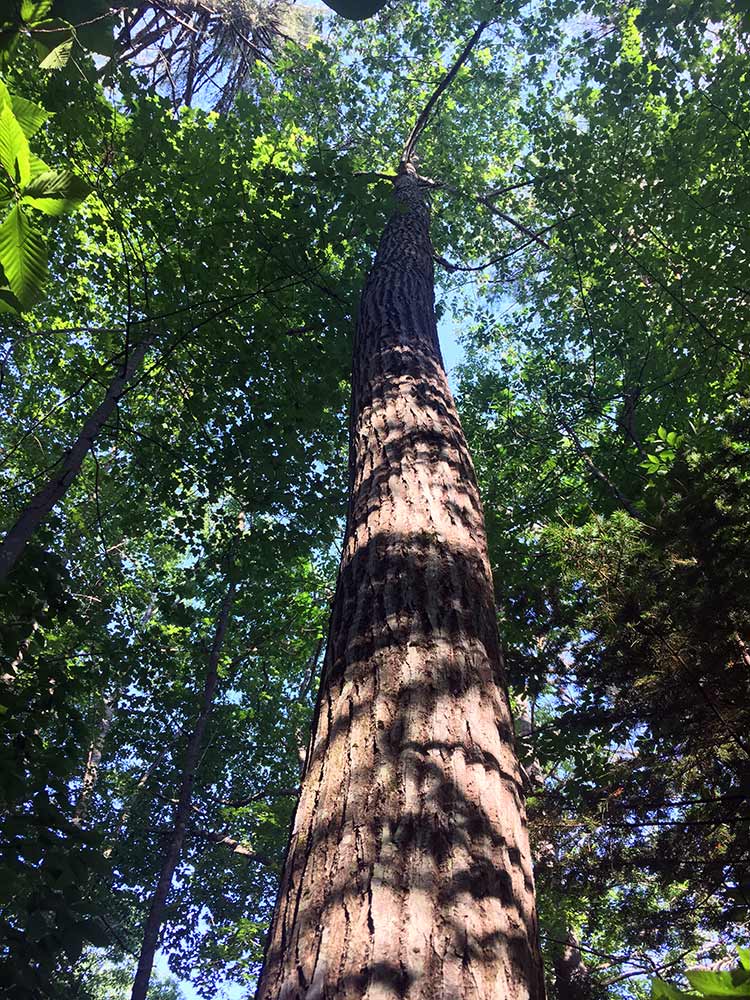
The large surviving American chestnut tree in Lovell, Maine

The large surviving American chestnut tree in Lovell, Maine

At the time, I did not know about the American chestnut blight that had killed an estimated four billion trees across the eastern U.S., or that it was so abundant prior to the blight, which was first discovered in 1904. I also learned that the American chestnut provided sustenance for wildlife, shelter for flora and fauna, and rot-resistant lumber.

Soon thereafter, I joined The American Chestnut Foundation (TACF) when I learned about its inspiring mission. I attended one of their annual fall meetings in Maine where I finally met Dr. Roth, as well as Dr. Allison Oakes from The State University of New York College of Environmental Science and Forestry (SUNY-ESF), and Dr. Thomas Klak from the University of New England. After meeting these experts, I decided to try and coordinate a tree cloning project. I asked Frank Kimball of Treeco in Bridgton, ME, if he was interested in helping to harvest cuttings from the top of the Lovell American chestnut. He agreed, and in July 2019, we gathered 200 cuttings from the top of the tree with permission from the University of Maine, which owns the land.
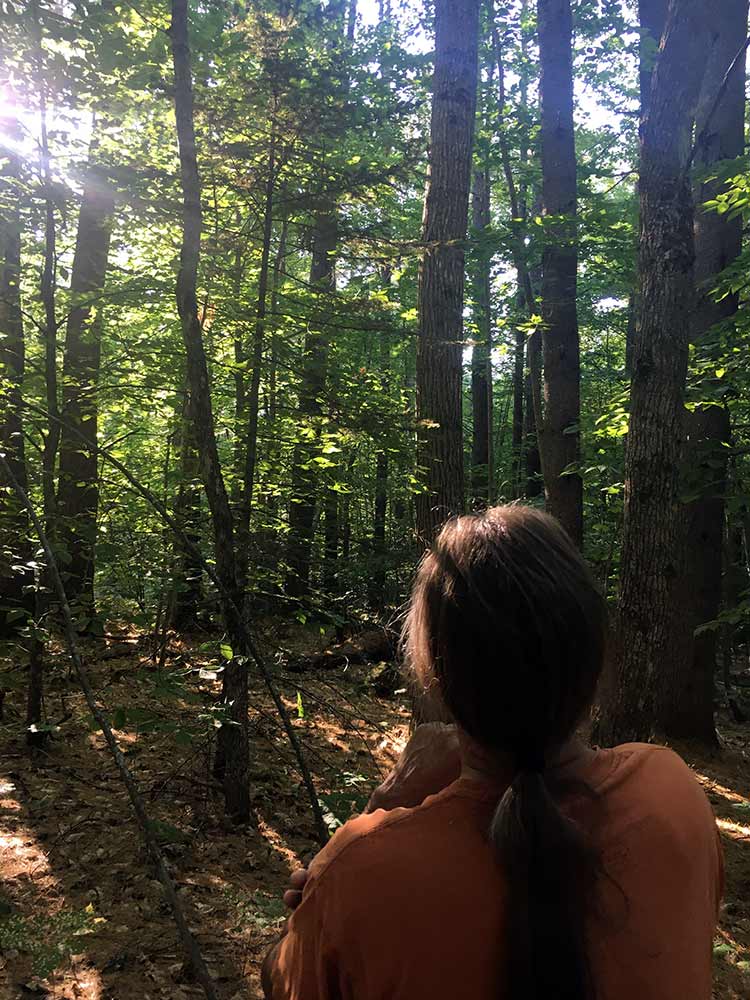
Frank Kimball preparing to climb the large surviving American chestnut tree in Lovell, Maine. Photo Joe Shaffner

Frank Kimball preparing to climb the large surviving American chestnut tree in Lovell, Maine.

I sent half of the cuttings to Dr. Oakes at SUNY-ESF and half to the Archangel Ancient Tree Archive. Then, my activity on the project lapsed for a few years: my family moved to North Carolina, COVID struck, and my kids came home from college. I got distracted.
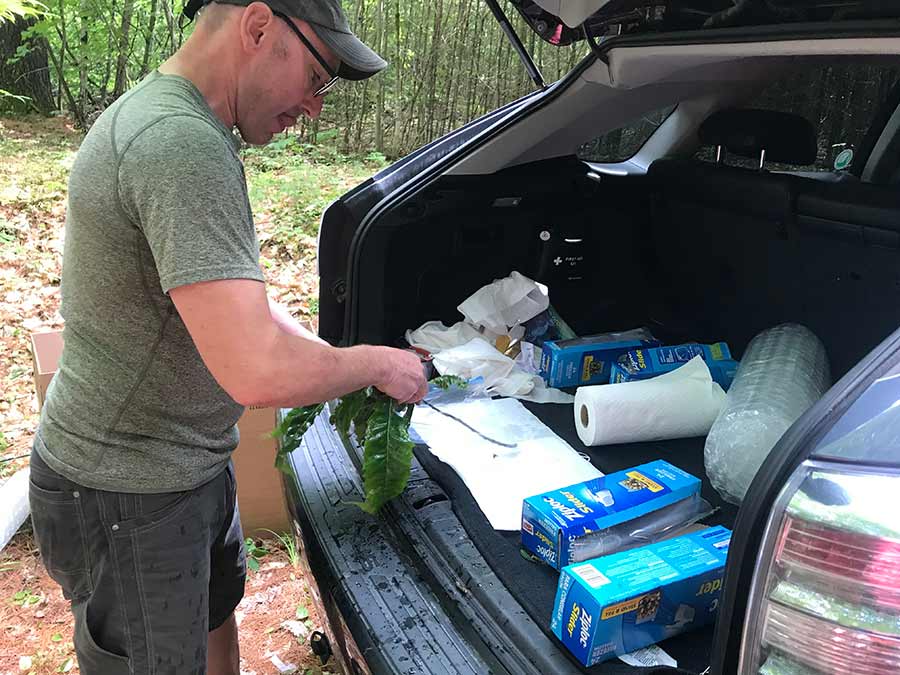
Joe Shaffner preparing 100 cuttings for shipment to ESF

Joe Shaffner preparing 100 cuttings for shipment to ESF

Fast forward to November 2024 and the 2nd Annual Chestnut Carnival in Pittsboro, NC. TACF sent a request for volunteers to help represent them at the festival, and I decided to participate. Before leaving, I revisited the email I had sent to Dr. Oakes about the cuttings and discovered some good news!

Hi Joe,
The Lovell chestnut is still in culture (albeit a bit stubborn to work with!).
We were actually able to get some pollen from the Lovell culture this year and it was used in controlled pollinations over the summer. It produced about 20 seeds! The seeds are non-transgenic, but we will be planting them at our field station to be wild-type mother trees in the future.
Best,
Hannah Pilkey
Tree Production Manager
The American Chestnut Research & Restoration Project
SUNY College of Environmental Science & Forestry

This information made my day, even my whole month, and I don’t believe that all of this is a coincidence.

Instead of tuning into all the omnipresent bad news, I hope you will join me in spreading the word by encouraging your friends to volunteer and using your hands and passion to help rescue the majestic American chestnut. I plan to spend more time volunteering at TACF. Members receive access to the annual wild-type seed sale and other benefits, so join today and let’s plant some trees!

Thank you to those who have been instrumental in supporting my efforts: Dr. Brian Roth, Dr. Alison Oakes, Dr. Thomas Klak, Hannah Pilkey (SUNY-ESF), and Nate Osborne, fellow North Carolinian and NC/SC Chapter member. A special thanks to Frank Kimball of Treeco, who passed away in February 2024, before knowing that his work harvesting the Lovell American chestnut tree was not in vain.

Further Reading: UNE American Chestnut Restoration Program

Carolinas News Chapter Menu

National Facebook

Comments Box SVG iconsUsed for the like, share, comment, and reaction icons

We had a great time at our recent spring meeting, part of which included a tour of Meadowview Research Farms for staff and our board of directors. We discussed current projects and the future of the recurrent genomic selection (RGS) program, and highlighted important infrastructure needs that will help support future growth and continued research efforts. Investing in these areas will be key to advancing our mission and strengthening the work being done. We could not have done this alone; thank you to everyone who participated and contributed to such a productive and inspiring day!

#americanchestnut #RestorationInProgress #chestnutresearch #forestrestoration #meadowviewresearchfarms #conservationscience
... See MoreSee Less

We had a great time at our recent spring meeting, part of which included a tour of Meadowview Research Farms for staff and our board of directors. We discussed current projects and the future of the recurrent genomic selection (RGS) program, and highlighted important infrastructure needs that will help support future growth and continued research efforts. Investing in these areas will be key to advancing our mission and strengthening the work being done. We could not have done this alone; thank you to everyone who participated and contributed to such a productive and inspiring day!#AmericanChestnut #RestorationInProgress #ChestnutResearch #ForestRestoration #MeadowviewResearchFarms #ConservationScience

April events! Kicking things off is Chestnut Chat, an event open to everyone, everywhere.

Visit our events calendar for more information on each event.

#explorepage #chestnutchat #events #getinvolved #ActNow
... See MoreSee Less

April events! Kicking things off is Chestnut Chat, an event open to everyone, everywhere.Visit our events calendar for more information on each event. #explorepage #chestnutchat #events #getinvolved #actnowImage attachmentImage attachment+3Image attachment

Check out this article on Clemson News about how scientists from Clemson University, Virginia Tech and The American Chestnut Foundation are using genomic selection to develop trees capable of surviving chestnut blight and Phytophthora root rot.

Read the article to hear more about Clemson's role in studying Phytophthora root rot: news.clemson.edu/clemson-scientists-help-advance-effort-to-restore-the-american-chestnut/

#explorepage #news #environment #americanchestnut #nature
... See MoreSee Less

Check out this article on Clemson News about how scientists from Clemson University, Virginia Tech and The American Chestnut Foundation are using genomic selection to develop trees capable of surviving chestnut blight and Phytophthora root rot. Read the article to hear more about Clemsons role in studying Phytophthora root rot: https://news.clemson.edu/clemson-scientists-help-advance-effort-to-restore-the-american-chestnut/#explorepage #news #environment #americanchestnut #nature

63 CommentsComment on Facebook

Good luck

To have the American chestnut tree back would be so great. I remember them. Yep, I am that old!

Would have loved to seen them when they covered the Eastern Forest , Great news on developing a blight and root rot resistant Chestnut

View more comments

We are not apart from the Earth—we are a part of it. Not something to own or use, but something we belong to. A living part of us, meant to be loved and cared for as deeply as anything else we hold dear.

#restoration #Conservation #americanchestnut #chestnut #trees #trending
... See MoreSee Less

We are not apart from the Earth—we are a part of it. Not something to own or use, but something we belong to. A living part of us, meant to be loved and cared for as deeply as anything else we hold dear.#restoration #conservation #americanchestnut #chestnut #trees #trending

1 CommentComment on Facebook

“Conservation is getting nowhere because it is incompatible with our Abrahamic concept of land. We abuse land because we regard it as a commodity belonging to us. When we see land as a community to which we belong, we may begin to use it with love and respect.” ― Aldo Leopold

TACF is hiring!
We’re looking for a 2026 New England Restoration Intern to support hands‑on chestnut breeding and forest restoration work across our New England chapters. This paid summer internship offers real‑world experience in plant breeding, field research, orchard management, and conservation science. 🌱
Know someone who’d be a great fit? Tag them!

Visit tacf.org/employment/ to find out more information and apply!

#americanchestnut #internship #hiring #explorepage #conservation #forestrestoration
... See MoreSee Less

TACF is hiring!We’re looking for a 2026 New England Restoration Intern to support hands‑on chestnut breeding and forest restoration work across our New England chapters. This paid summer internship offers real‑world experience in plant breeding, field research, orchard management, and conservation science. 🌱Know someone who’d be a great fit? Tag them!Visit https://tacf.org/employment/ to find out more information and apply! #americanchestnut #internship #hiring #explorepage #conservation  #forestrestoration
Load more