Carolinas News

Pollinations at the Pryor Farm, Edneyville, NC, June 18, 2025

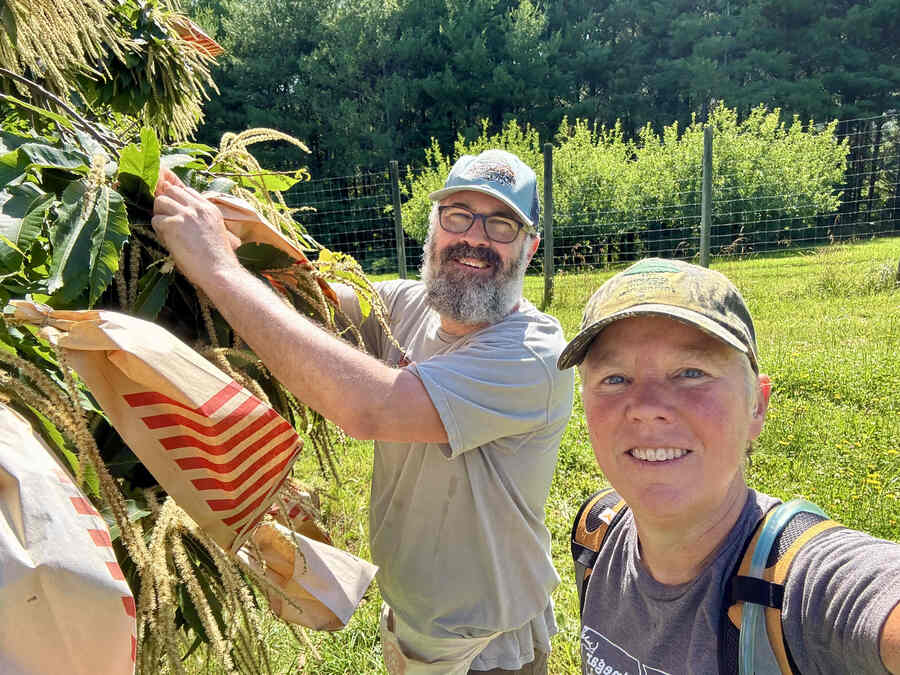
Jon Taylor and Jules Smith prepare to pollinate mature female chestnut flowers that have previously been bagged to allow for controlled crosses to be made. Pollen and mother trees were genetically selected for the first generation of Recurrent Genomic Selection (RGS) crosses.

Jon Taylor and Jules Smith prepare to pollinate mature female chestnut flowers that have previously been bagged to allow for controlled crosses to be made. Pollen and mother trees were genetically selected for the first generation of Recurrent Genomic Selection (RGS) crosses.


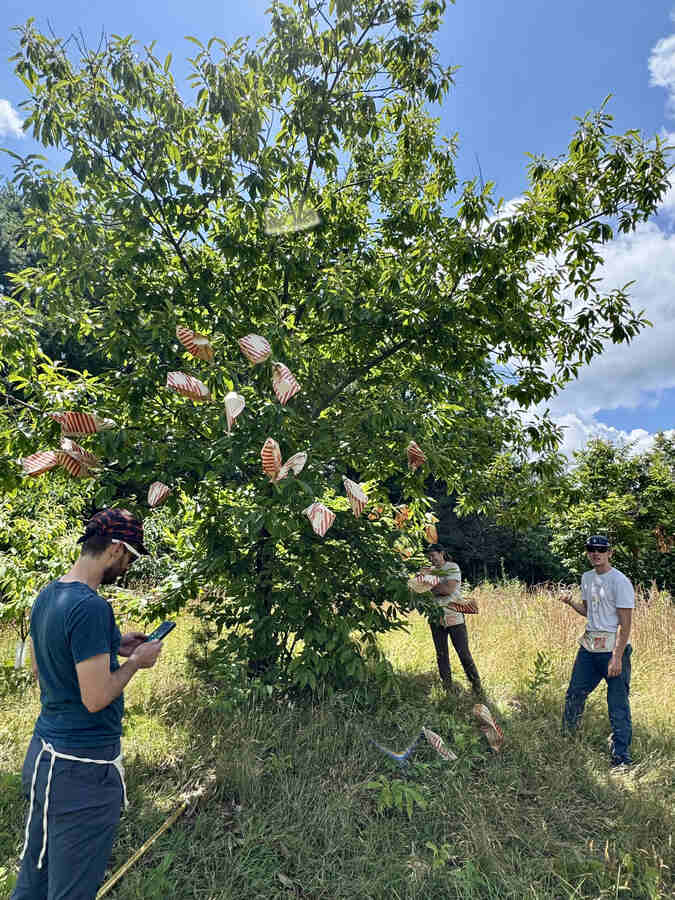
Group picture. Participants included TACF Staff, Jen Picicci, Jules Smith, Jamie Van Clief (who took the picture), Jared Westbrook, and Warren Wilson Student Intern, Mateo Craven. Also, NC/SC Chapter Members, Jon Taylor, and Frank Southecorvo. Many thanks to all!
Group picture. Participants included TACF Staff, Jen Picicci, Jules Smith, Jamie Van Clief (who took the picture), Jared Westbrook, and Warren Wilson Student Intern, Mateo Craven. Also, NC/SC Chapter Members, Jon Taylor, and Frank Southecorvo. Many thanks to all!


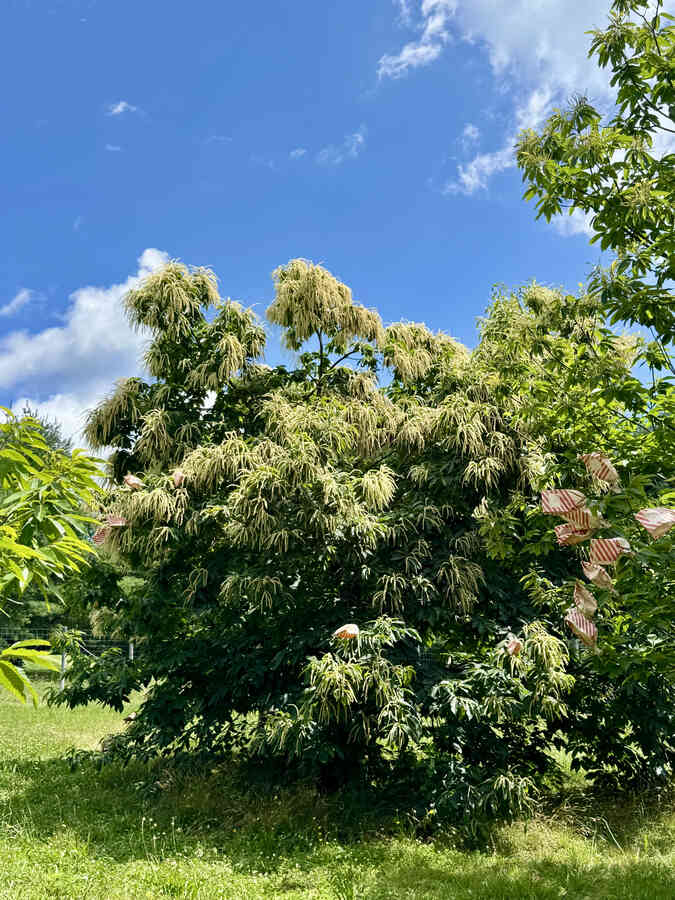
This healthy chestnut hybrid produces an abundance of male catkins each year.
This healthy chestnut hybrid produces an abundance of male catkins each year.


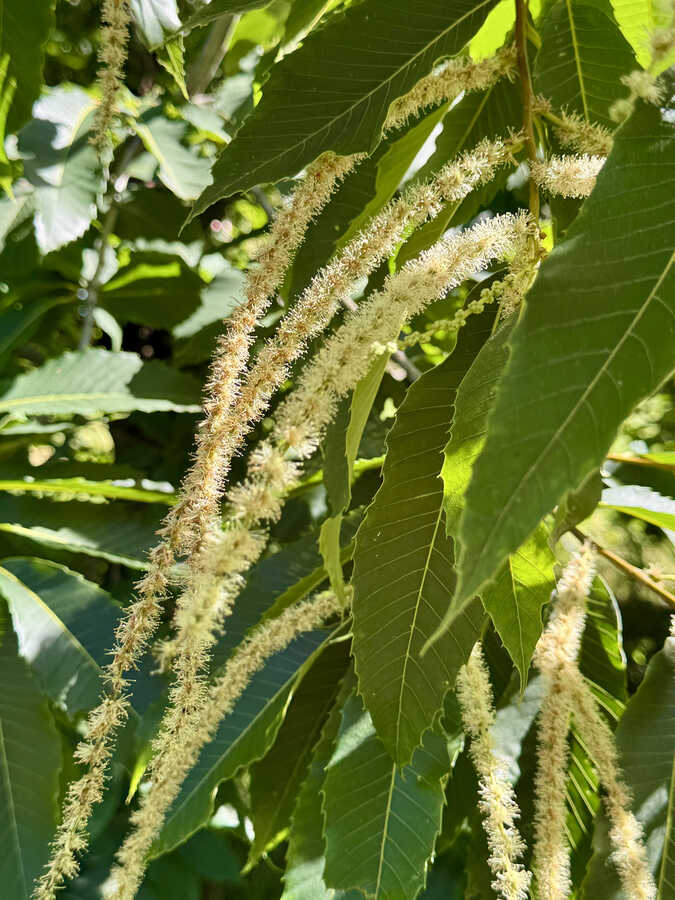
Chestnut catkins containing a copious amount of greenish-white pollen.
Chestnut catkins containing a copious amount of greenish-white pollen.


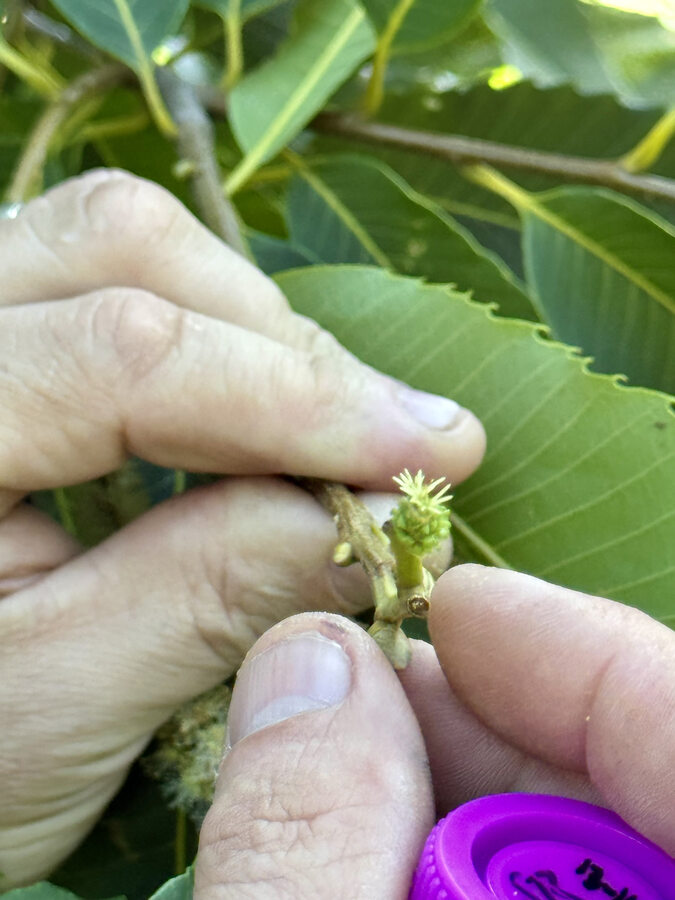
A mature female chestnut flower ready to be pollinated. It looks like a tiny bur.
A mature female chestnut flower ready to be pollinated. It looks like a tiny bur.


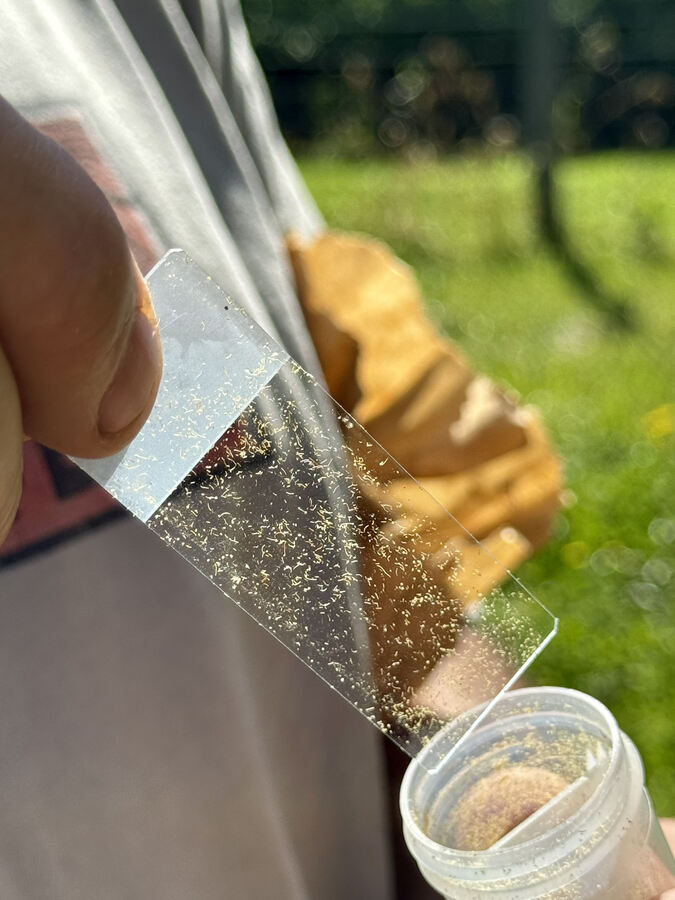
One method of transferring pollen to the female flower is to use a glass slide, dipped in pollen and gently rubbed on the female flower.
One method of transferring pollen to the female flower is to use a glass slide, dipped in pollen and gently rubbed on the female flower.


Record keeping is vital to keeping track of the parents of each of the crosses.
Record keeping is vital for keeping track of the parents of each of the crosses.


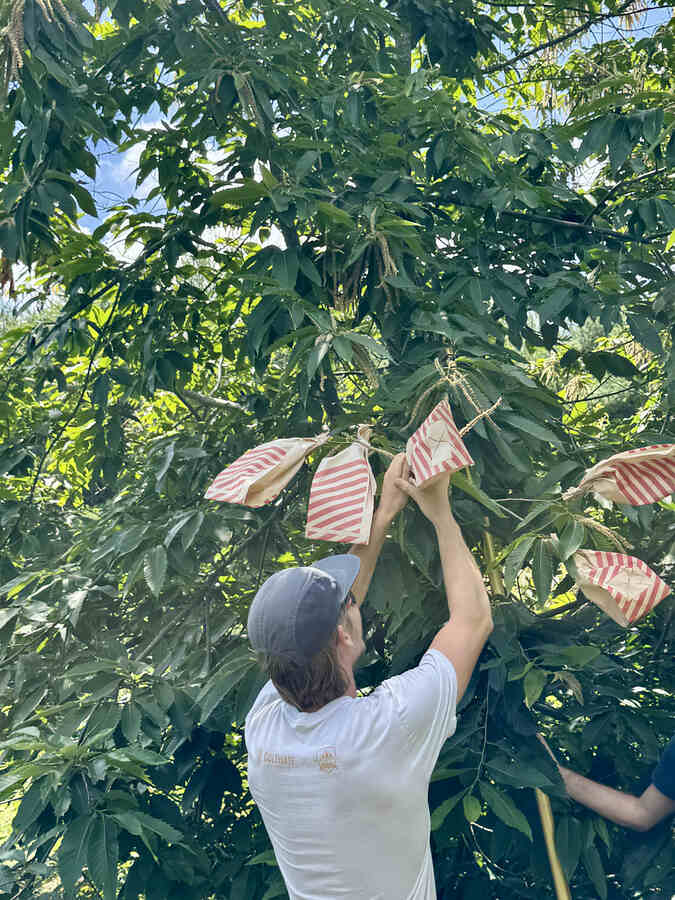
Mateo placing a bag marked with an X on a female chestnut flower just pollinated.

Mateo placing a bag marked with an X on a female chestnut flower just pollinated.


Most of the flowers were able to be reached without a ladder. As the trees grow, ladders or lifts are used to make crosses.

Most of the flowers were able to be reached without a ladder. As the trees grow taller, ladders or lifts are used to make crosses.
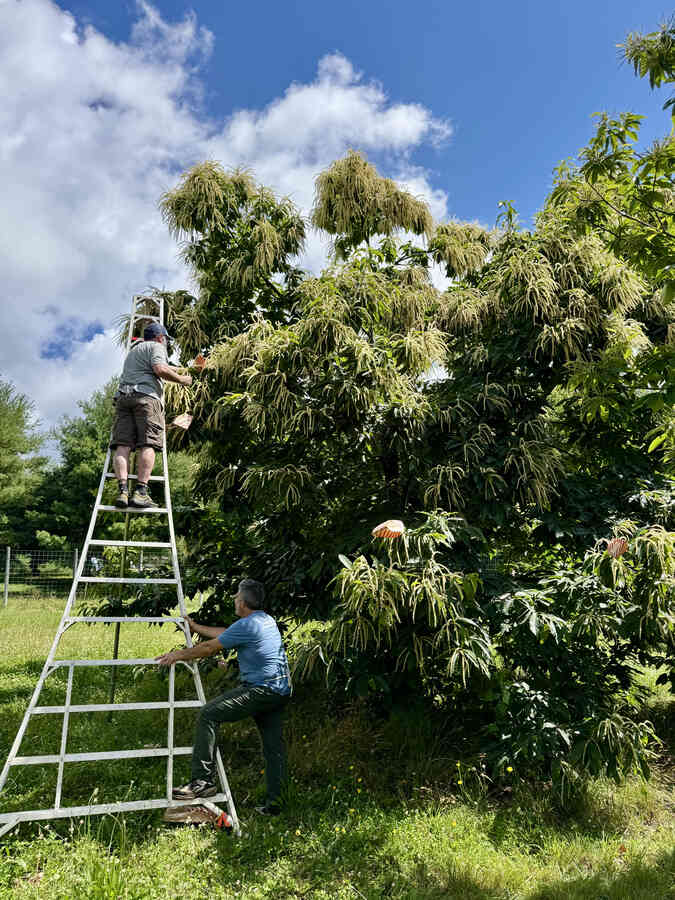
 

Jon and Frank use an orchard ladder to reach more female flowers for pollination.
Jon and Frank use an orchard ladder to reach more female flowers for pollination.


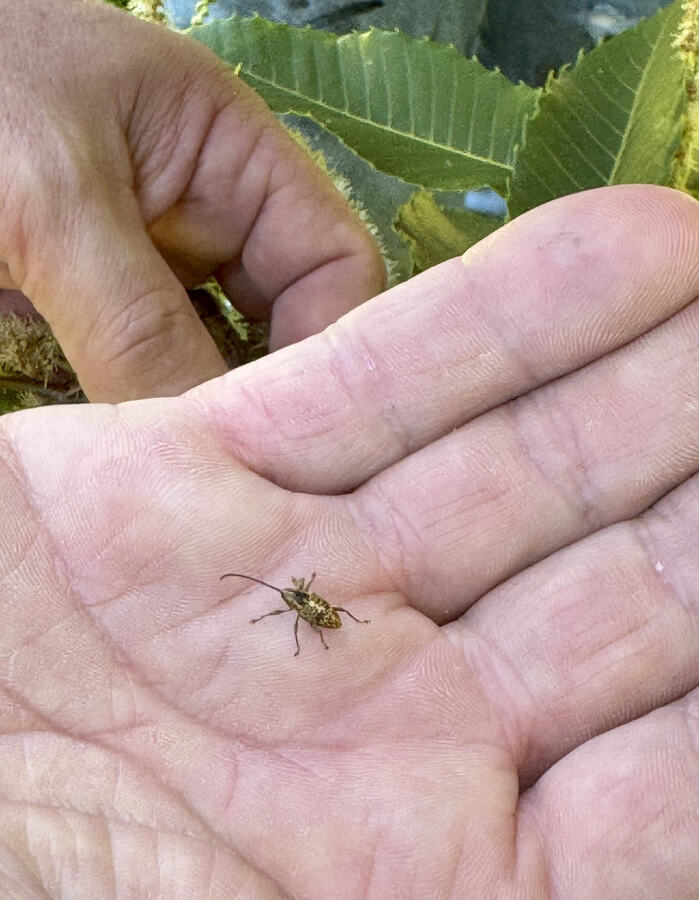
A chestnut weevil adult. Female chestnut weevils drill holes into nuts and lay eggs there, mostly as the burs open. Once the eggs hatch, the cream-colored larvae feed on the nut.

A chestnut weevil adult. Female chestnut weevils drill holes into developing nuts and lay eggs. Once the eggs hatch, the cream-colored larvae feed on the nuts.
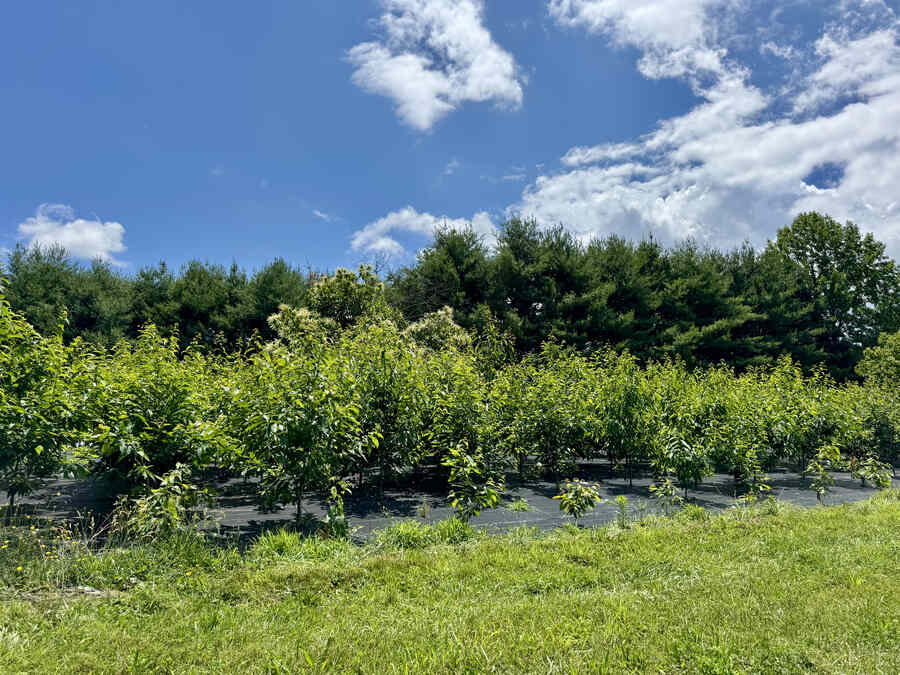
 

The Germplasm Conservation Orchard (GCO) at the Pryor Farm. 100% American chestnuts.

The Germplasm Conservation Orchard (GCO) at the Pryor Farm. 100% American chestnuts.


The photos above were taken by Jules Smith.

Paul Sisco contributed by providing some of the pollen from another orchard for today’s pollinations.


Carolinas News Chapter Menu

National Facebook

Comments Box SVG iconsUsed for the like, share, comment, and reaction icons

Last week, staff at TACF’s national office in Asheville joined Carolinas Chapter President Peggy McDonald, husband Bob, and Chapter board member Jon Taylor for a hike at Albert Mountain in Western NC to visit wild American chestnut trees in search of flowering catkins.

During their venture, the team also came across a few cool amphibians: a red-legged salamander, which only inhabits portions of the southern Appalachian Mountains, and a red-spotted newt, which is much more common, but its brilliant red is stunning!

Of course, the biggest thrill was seeing large surviving chestnut trees and, as the day wrapped up, collecting some beautiful catkins that were high in the canopy of a tree on the way down the mountain. Pollen collected from the catkins will be used in TACF’s southern region breeding program.

#hike #nature #getoutside #americanchestnut #pollination
... See MoreSee Less

5 CommentsComment on Facebook

Ils sont en fleur au Québec aussi, ça fait du bien de les voir grandir.

Fantastic

what pole was that!?

View more comments

Trying to figure out if you found an American chestnut or a Chinese chestnut? These identifiers should help!

#explore #forestry #education #americanchestnut #conservation
... See MoreSee Less

3 CommentsComment on Facebook

I love it when the music is up front and the narration is in the background. Awesome.

BeeKeeper Mango

Every business in every city should have to plant a tree every year as part of their yearly licensing.

Very informative! ... See MoreSee Less

Very informative!Image attachmentImage attachment+1Image attachment

1 CommentComment on Facebook

Mary Armentrout-Acord

Do you have a favorite nature quote?

#explore #americanchestnut #nature #quote #restoration
... See MoreSee Less

2 CommentsComment on Facebook

“Though I do not believe that a plant will spring up where no seed has been, I have great faith in a seed. Convince me that you have a seed there, and I am prepared to expect wonders.” Henry David Thoreau

Im hoping to see this in my lifetime

Chestnuts look so beautiful during pollination season, their catkins (the yellow fuzzy blossoms) are often described as fireworks. 🌰 🎇

Which image is your favorite?

#americanchestnut #fieldwork #nature #pollination #explore
... See MoreSee Less

Chestnuts look so beautiful during pollination season, their catkins (the yellow fuzzy blossoms) are often described as fireworks. 🌰 🎇 Which image is your favorite?#americanchestnut #fieldwork #nature #pollination #exploreImage attachmentImage attachment+5Image attachment

4 CommentsComment on Facebook

Wow. Way more explosive looking than the European chestnuts. Beekeepers should be all over that. It’s the most distinct honey I’ve ever had.  As for the aroma… Well… Enough said.

Catkins in my yard are buzzing with bees!

I have tended those trees. MD TACF, join us!

Load more