Connecticut news

2010 CT ANNUAL MEETING

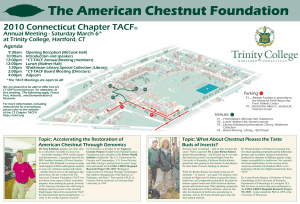
cttacf_trinity_2009_largeSaturday March 6th we’ll be hosting the annual meeting of the CT Chapter of The American Chestnut Foundation at Trinity College in Hartford, CT. We have interesting presenters and a fantastic venue – and hope you’ll mark you calendar and join us. Should you decide to join, you MUST RSVP by calling Kendra Gurney at 802.951.6771 x1350 or sending her an e-mail at gro.fca@ardnek.

We have been approved to offer qualified attendees two CEU hours of credit in the following licensing categories: Forest Pest Management (category 2), Arborist (category 3D) and Demonstration and Research (category 10). Submission forms and sign-up will be available at the meeting. For further information please contact gro.fca@ardnek.

Simply looking for directions? See the directions on the Trinity web-site. See the brochure with campus map in easily printable format with venue annotations for directions on how to get to each venue.

Topic: Accelerating the Restoration of American Chestnut Through Genomics

cttacf_annualmtgtrinity_6mar2010
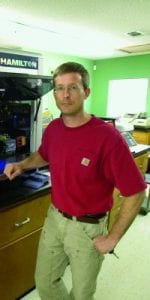
Dr. Tom Kusisiak Photo: John Butnor, USFS

Dr. Tom Kusisiak
Photo: John Butnor, USFS

Dr. Tom Kubisiak spends a lot of his time in a world that’s invisible to most of us — the double-stranded, DNA world of genes and chromosomes. A geneticist based at the SRS Southern Institute of Forest Genetics in Saucier, MS, Kubisiak is a master at using small snippets of DNA called genetic markers to tease out variations among individuals — whether they’re trees or the pathogens that infect them. He has worked with The American Chestnut Foundation (TACF) on just about every aspect of their restoration program, from charting the genetic diversity of the American chestnut trees still living to helping map the genome of the chestnut blight fungus. Most of his research for TACF has had immediate practical application — a rarity in the world of genetic research.

Dr. Kubisiak is a member of the Fagaceae Genome Project (Funded by the National Science Foundation) and a member of the “Forest Health Initiative” (funded by The U.S. Endowment for Forestry and Communities, U.S. Forest Service, and Duke Energy), and has been an active long-term participant in the USDA CREES Regional Research Project NE-1033 “Biological Improvement of Chestnut Through Technologies that Address Management of the Species, its Pathogens, and Pests.” Tom earned a Ph.D. in Forestry (Forest Genetics) at Louisiana State University in 1994.

For more information about our speaker, visit this article about Dr. Kubisiak at the Southern Research Station.

The presentations will be followed by operational meetings attended by those of you with an interest or business in attending. You are welcome to attend just those sections of the meeting that interest you as outlined in the agenda below.

Agenda

9:30am Opening Reception
10:00am Introduction and speakers
12:00pm CT-TACF Annual Meeting followed by Lunch
1:30pm Visit to Trinity’s Watkinson Library Special Collection
2:00pm CT-TACF Board Meeting – Open to All!
4:00pm Expected close of Chapter business

The program is free to both members and non-members, as is lunch for those who advance register. To advance register e-mail to indicate your interest in attending. Details on logistics, parking and presentation venues, will be provided well in advance of the meeting.

We thank Trinity College, and especially Dr. Scott Smedley, for their partnership in planning this meeting and providing the venue for the presentations.


Connecticut news Chapter Menu

National Facebook

Comments Box SVG iconsUsed for the like, share, comment, and reaction icons
9 hours ago

A major milestone for conservation science.

Our Director of Science, Dr. Jared Westbrook, has published new research in “Science” showing how genomic tools can transform endangered species recovery. By using recurrent genomic selection, we can predict resilience earlier, shorten breeding cycles, and build a restoration system that grows stronger with every generation.

This model doesn’t just help the American chestnut, it could guide restoration for threatened species across the world.

Read the full article: www.science.org/eprint/SBHDH76BXDK366UMHU44/full?activationRedirect=/doi/full/10.1126/science.adw...

#ScienceResearch #ConservationScience #americanchestnut #restoration #conservation #science #nature #explorepage #chestnuts
... See MoreSee Less

A major milestone for conservation science.Our Director of Science, Dr. Jared Westbrook, has published new research in “Science” showing how genomic tools can transform endangered species recovery. By using recurrent genomic selection, we can predict resilience earlier, shorten breeding cycles, and build a restoration system that grows stronger with every generation.This model doesn’t just help the American chestnut, it could guide restoration for threatened species across the world.Read the full article: https://www.science.org/eprint/SBHDH76BXDK366UMHU44/full?activationRedirect=/doi/full/10.1126/science.adw3225#ScienceResearch #ConservationScience #americanchestnut #restoration #conservation #science #nature #explorepage #chestnutsImage attachment

5 CommentsComment on Facebook

Across the world...is that like around the world?

Anyone have any links or information about Iodine use soil/spray and duration for eradicating or postponing the fungal infection? All the research I've done shows Iodine could cure the infection if using science.

Would this work for the American elm tree?

View more comments

We’re honored to be highlighted in this AVLtoday feature on the American chestnut’s story in Western North Carolina.

While the path to restoration is long, moments like this remind us how many people care about bringing this tree back to the landscape it once defined.

Thank you to everyone who continues to help this story grow.

Read the article: avltoday.6amcity.com/chestnut-tree-wnc

Photo curtsey of Audrey Snow Owen of PA/NJ TACF

#americanchestnut #explorepage #restoration #conservation #environment #nature #asheville #chestnuts
... See MoreSee Less

We’re honored to be highlighted in this AVLtoday feature on the American chestnut’s story in Western North Carolina. While the path to restoration is long, moments like this remind us how many people care about bringing this tree back to the landscape it once defined.Thank you to everyone who continues to help this story grow.Read the article: https://avltoday.6amcity.com/chestnut-tree-wncPhoto curtsey of Audrey Snow Owen of PA/NJ TACF#americanchestnut #explorepage #restoration #conservation #environment #nature #asheville #chestnuts

1 CommentComment on Facebook

Is the photo a back crossed hybrid of American chestnut and Chinese chestnut?

Freedom seekers—enslaved Africans and African Americans who escaped slavery in pursuit of freedom—faced hunger, exposure, and unfamiliar terrain as they journeyed north.

Black History Month provides an important opportunity to honor the past while also recognizing how Black knowledge, leadership, and community continue to shape the present. From histories rooted in land and survival to modern platforms and outdoor spaces where connection and representation matter.

Throughout February, we will share a series of four stories that explore Black relationships to land, legacy, and community, looking at both historical foundations and contemporary expressions.

Read more about Freedom Seekers: tacf.org/black-history-and-the-american-chestnut/

#BlackHistoryMonth #americanchestnut #explorepage #chestnuts #BlackHistoryMonth2026 #restoration #Conservation #history
... See MoreSee Less

Freedom seekers—enslaved Africans and African Americans who escaped slavery in pursuit of freedom—faced hunger, exposure, and unfamiliar terrain as they journeyed north.Black History Month provides an important opportunity to honor the past while also recognizing how Black knowledge, leadership, and community continue to shape the present. From histories rooted in land and survival to modern platforms and outdoor spaces where connection and representation matter.Throughout February, we will share a series of four stories that explore Black relationships to land, legacy, and community, looking at both historical foundations and contemporary expressions.Read more about Freedom Seekers: https://tacf.org/black-history-and-the-american-chestnut/ #blackhistorymonth #americanchestnut #explorepage #chestnuts #blackhistorymonth2026 #restoration #conservation #historyImage attachmentImage attachment

3 CommentsComment on Facebook

Hopefully they will be developing a mold resistant tree.

That's a really interesting perspective. I think a lot of woodcraft and other types of knowledge about the natural world, like astronomy, had to be shared. Also, marine skills.

Chestnuts?

January might feel like the quiet season, but at our research farms it’s already time to get growing. This month, we’re sowing chestnut seeds that will be used in upcoming research and breeding efforts. Starting seeds in January gives us a valuable head start on the growing season, allowing seedlings to establish early and be ready for genotyping in the spring and summer. Each seed represents an important step forward in our research, helping us better understand growth, resistance, and performance across chestnut species and hybrids. #AmericanChestnut #RestorationInProgress

#ChestnutResearch #ForestRestoration #MeadowviewResearchFarms #ChestnutSeedlings
... See MoreSee Less

Load more

Subscribe to the CT Chapter Newsletter

* indicates required