

Connecticut News
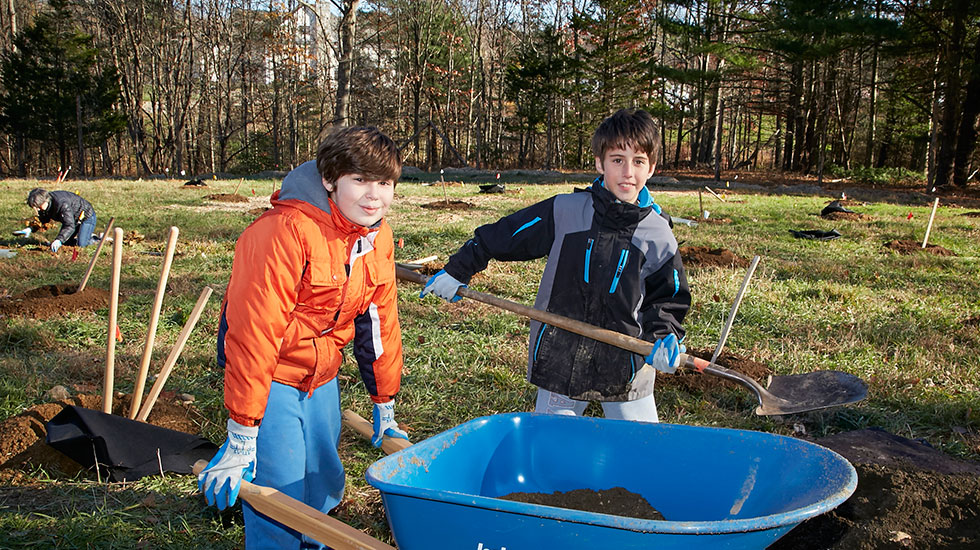
American Chestnut seedlings at The Greenwich Land Trust
GREENWICH, CT – On Saturday, November 15th, 75 volunteers planted nearly 400 American Chestnut seedlings at The Greenwich Land Trust’s American Chestnut Sanctuary. The Greenwich Land Trust (GLT) partnered with The American Chestnut Foundation and the Greenwich Tree...

Why is Chestnut Important?
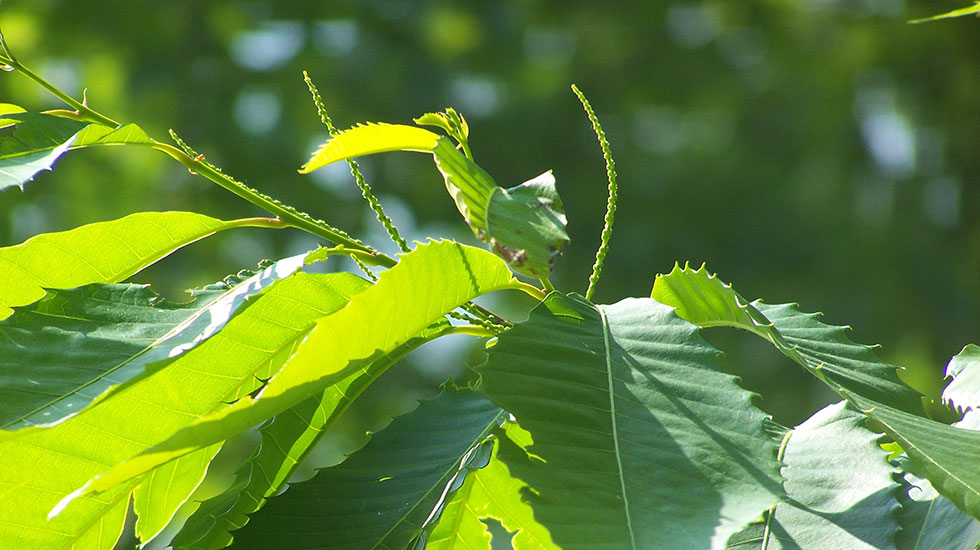
What makes American chestnut so special? The American chestnut was once one of the most important trees in our eastern hardwood forests. It ranged from Maine to Georgia, and west to the prairies of Indiana and Illinois. It grew mixed with other species, often making...
How Can I Contribute?
It is easier than you might think to make a contribution! Looking to learn more and be a part of what we are doing? Everyone likes to be involved at different levels and we have many different ways that you can contribute to our mission. Whether you are just learning...
2014-Annual-Meeting
Saturday April 19th we'll be hosting the annual meeting of the CT Chapter of The American Chestnut Foundation at Bowers Auditorium, Sage Hall, Yale University in New Haven, CT. We have interesting presenters and a fantastic venue - and hope you'll mark you calendar...
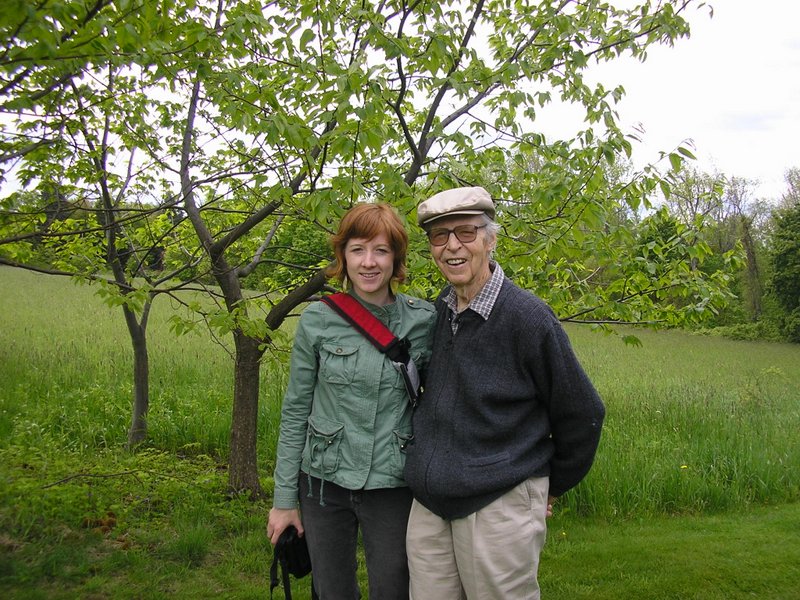
Rod Longley, Litchfield Resident and Longtime Foundation Supporter Passes Away
Rod Longley - Litchfield resident and Longtime Foundation Supporter - Passes Away Founding American Chestnut Foundation "Connecticut Chapter" member and Litchfield resident Rod Longley, passed away October 18th, his 95th birthday. I got to know Rod Longley and...
What is a TACF Seed Orchard?
A TACF seed orchard represents one of the final generations of breeding in TACF's current breeding program. It's the next step for the offspring of resistant trees identified in the Chapter's Backcross Breeding Orchards. The Connecticut Chapter of the American...
Connecticut Chapter Menu
National Facebook

We love our Bonner Scholars!Thank you, Bonner Scholars!
As we head into the fall semester, we want to take a moment to recognize and thank our wonderful Bonner Scholars for their time, hard work, and dedication to Meadowview Research Farms last spring semester! We are especially grateful to Gabbie and Maddy who graduated from Emory & Henry this past spring, who each served with The American Chestnut Foundation for more than two years. Their commitment and contributions have made a lasting impact on our research farm, and we are so thankful for all they have done! We also want to recognize Carson, who joined us last spring and has been an important part of our team. We’re excited that Carson will be continuing to serve with us this semester.
Thank you, Gabbie, Maddy, and Carson, for all of your hard work and for being such an important part of the Meadowview family. We wish Gabbie and Maddy all the best in their next adventures, and we’re excited to have Carson continuing on with us!
And an additional thanks to Meadowview Research Farms' Tree Improvement Scientist, Lucinda Wigfield, for her outstanding coordination and supervision of this important student group!
#americanchestnut #castaneadentata #americanchestnutfoundation #ChestnutResearch #meadowviewresearchfarms

0 CommentsComment on Facebook
The mysterious voice in this video might be onto something... 👀🌰
Looking for a research project idea? The American chestnut has plenty of unanswered questions waiting to be explored.
If your project touches on chestnut restoration, genetics, blight, ecology, biotechnology, history, or another chestnut-related topic, consider sharing your work at the TACF 2026 Symposium Poster Session.
Give your research an audience beyond the classroom and connect with others working to restore the American chestnut.
For more information visit: tacf.org/wp-content/uploads/2026/07/2026-Poster-Session-RFP.pdf
#americanchestnut #humor #students #StudentResearch #forestry
0 CommentsComment on Facebook
Inside this American chestnut box is a Dolly Parton song that no one will hear until 2046.
Dolly Parton's "Dream Box" will remain sealed until her 100th birthday. Made from American chestnut wood, it stands as a tribute to her uncle and mentor, Bill Owens.
Many know Owens as an important influence on Dolly's songwriting. Fewer know that he was also a tireless advocate for restoring the American chestnut, a tree once thought lost from eastern forests.
Inside the chestnut box is a song Dolly wrote to be released as her last: "My Place in History."
There is something fitting about that. A song about the place we leave behind, preserved in a box made from a tree once thought lost that generations of people have worked to bring back.
Like so much in conservation, Bill Owens' legacy is not only what he accomplished himself, but what he passed on: knowledge, passion, and a connection to those who came after him.
Forests endure because people choose to carry them forward. So do legacies.
When that box is finally opened in 2046, I hope to be listening to "My Place in History" beneath the shade of an American chestnut; one that Bill Owens helped bring back.
#AmericanChestnut #ForestRestoration #DollyParton #Conservation #Legacy
100 CommentsComment on Facebook
Hope I live to 92 to hear it and if I do, I hope my brain knows what I’m listening to!
Gosh, I'm going to have to reincarnate to hear this in 2046! Hoping to be born in Appalachia, maybe as a squirrel....
I'll be gone in 20 years. I'm mid 70s now. I understand her wanting to wait, but wouldn't it have been better for her to just name a number, like 5 years beyond her date of death or something like that, so that people who knew her, remembered her, would appreciate it more? 20 years from now my kids will be in their 70s, and they may or may not remember her. My grandkids won't have a clue. And they'll be middle-aged! Kind of a shame. She must have had her reasons however ❤️😭
"Dolly's music is rooted in the Appalachians," her uncle Bill Owens once said. "The American chestnut was once the most important tree in these mountains, feeding wildlife and people alike."
The comparison feels especially meaningful today. Both Dolly Parton and the American chestnut grew from Appalachian roots to become enduring icons. Both nourished generations, one with food and shelter, the other with music, compassion, and hope. Both became symbols of resilience, generosity, and the richness of mountain culture.
The American chestnut's story lives on in the forests it shaped. Dolly's story lives on in the millions of lives she touched.
Appalachia gave the world both. And the world is better because it did.
Read our article "Dolly Parton: A Life Rooted In Giving" about Dolly's work with the Foundation and see how far her generosity reached: tacf.org/dolly-parton-a-life-rooted-in-giving/
#dollyparton #news #explore #tribute #country
6 CommentsComment on Facebook
As we mourn the loss of Dolly we should all take a moment in honor of the greatest person ever from East Tennessee in my lifetime. Her never-ending kindness, generosity, creativity, ambition, drive and raw talent will never be forgotten and should be an inspiration to us all.
I love this story!
She was a larger-than-life mountain nymph <3
This is part two so if you didn't see our last post, go check it out! When blight reached the remaining American chestnuts in Wisconsin's historic stand, the Helming family faced a difficult decision.
Today, those trees live on as part of a display at the National Museum of Forest Service History, where their story will inspire future generations.
Read an exclusive excerpt from an upcoming Chestnut magazine article about the process, and become a member to read the complete story in the next issue.
Click the following link to read: tacf.org/tacf-at-national-museum-forest-history/
#americanchestnut #member #restoration #news #explore
0 CommentsComment on Facebook