Georgia News

Dr. Martin Cipollini to speak at Dahlonega Science Cafe Monday, July 16, 2018

Monday July 16, 6:30 p.m.: Restoration of American chestnut in the southeastern United States; strategies for the development of disease resistance and conservation of genetic diversity.

Dahlonega Science Cafe, Bourbon Street Cafe, 90 Public Square North, Dahlonega, GA. 6:30 pm social hour, talk at 7:30 pm.

Prior to its demise in the early 1900s from two introduced disease agents (Phytophthora root rot and Cryphonectria blight), the American chestnut (Castanea dentata) was one of the most important trees of the eastern deciduous forests.  Some estimates suggest that approximately 25% of all trees within the Appalachian mountains were chestnuts. Their large size and annual production of high quality nuts made the trees a “foundation” species within many natural communities.  Moreover, humans found these trees enormously beneficial as sources of food, timber, and other uses, and thus the tree had considerable cultural and economic importance.  This all ended by the 1950s when populations of around 4 billion trees were reduced to a few hundred million, most of which were small sprouts rather than large, productive trees.
For over 30 years, The American Chestnut Foundation (TACF) has worked toward restoring this species using methods that introduce disease resistance and also by developing strategies and a network of partnerships necessary to reintroduce the trees to the wild.  In such a restoration project, capturing the genetic diversity present throughout the species’ range is an important component in addition to the development disease resistance.

This talk will describe TACF efforts being taken in the state of Georgia and other southern states to preserve genetic diversity of American chestnut and to introduce disease resistance into the trees.  Focus will be on classical breeding which introduces resistance genes from Chinese chestnut (C. mollissima), genetic engineering whereby resistance genes are introduced directly into American chestnuts, and modification of the blight fungus to weaken its virulence.  This three-pronged approach has been titled the 3-BUR model (Breeding, Biocontrol, and Biotechnology United for Research) and will involve significant collaboration among various TACF chapters and other entities, especially SUNY-ESF where the first American chestnuts with high blight resistance have been developed.

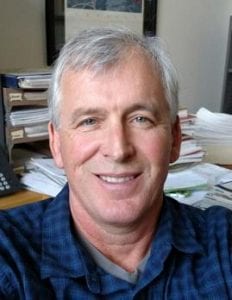
Dr. Martin L. Cipollini is the Dana Professor of Biology at Berry College, Mount Berry, Georgia, where he teaches undergraduate courses such as Principles of Microbiology, Botany and Ecology, Forest Ecology and Tropical Ecology (Costa Rica/Cuba).  He received B.S. and M.S. degrees in Biology from Indiana University of Pennsylvania, and a PhD. in Ecology from Rutgers University.  A faculty member at Berry College since 1995, his current research activities revolve around the college’s Longleaf Pine and America Chestnut projects.  In his role as science coordinator for the Georgia Chapter of TACF, he has helped establish numerous chestnut orchards across the state.  He is currently working with UNG on plans to establish a Phytophthora field test orchard at the university’s Hurricane Creek site.

Georgia News Chapter Menu

Georgia Facebook

Comments Box SVG iconsUsed for the like, share, comment, and reaction icons

Did you know that private landowners - even homeowners with a big backyard - can help support GA-TACF by planting trees on our behalf? Here are just two examples, one a two year old tree planted in Paul Burks' backyard in Atlanta and one a 6 year old tree planted in Scott Frazier's Bottomlands orchard near Taylorsville. Looking good guys!

Read more about planting trees with us here: tacf.org/ga-news/so-you-want-to-plant-some-chestnuts/

The American Chestnut Foundation
Berry College
... See MoreSee Less

Did you know that private landowners - even homeowners with a big backyard - can help support GA-TACF by planting trees on our behalf? Here are just two examples, one a two year old tree planted in Paul Burks backyard in Atlanta and one a 6 year old tree planted in Scott Fraziers Bottomlands orchard near Taylorsville. Looking good guys!Read more about planting trees with us here: https://tacf.org/ga-news/so-you-want-to-plant-some-chestnuts/The American Chestnut Foundation Berry CollegeImage attachment

2 CommentsComment on Facebook

Beautiful form on that second tree

I have room to plant American Chestnut trees! I would definitely plant them, just tell me how to get them.

We want to thank all of the volunteers who helped us this pollination season which is now complete! We were able to bag and pollinate 10 different trees (a record for or us) plus we collected pollen from a number of other trees. This work is crucial for our Best X Best (or RGS) chestnut disease resistance breeding program. Altogether, over the past three weeks, we have had 20 different volunteers plus several more who volunteered but had their shifts cancelled due to weather. We thank all of you! GA-TACF is an all-volunteer organization except for a few interns that are obligated to certain orchard sites (Flint, Hurricane Creek).

Our next major volunteer efforts will start in mid-September when we will harvest and shuck burs and tabulate our harvest. Please stay tuned for announcements about these opportunities! Click here to register to volunteer with us or to sign the volunteer waiver form if you have not already done so: theamericanchestnutfoundation.volunteerlocal.com/volunteer/?id=99170

Here are a few more photos of our final two days when we were assisted by Berry College students who are working in Dr. Adrienne Ernst's lab this summer.

The American Chestnut Foundation
Berry College
... See MoreSee Less

We want to thank all of the volunteers who helped us this pollination season which is now complete!  We were able to bag and pollinate 10 different trees (a record for or us) plus we collected pollen from a number of other trees.  This work is crucial for our Best X Best (or RGS) chestnut disease resistance breeding program.  Altogether, over the past three weeks, we have had 20 different volunteers plus several more who volunteered but had their shifts cancelled due to weather.  We thank all of you!  GA-TACF is an all-volunteer organization except for a few interns that are obligated to certain orchard sites (Flint, Hurricane Creek).  Our next major volunteer efforts will start in mid-September when we will harvest and shuck burs and tabulate our harvest.  Please stay tuned for announcements about these opportunities! Click here to register to volunteer with us or to sign the volunteer waiver form if you have not already done so: https://theamericanchestnutfoundation.volunteerlocal.com/volunteer/?id=99170Here are a few more photos of our final two days when we were assisted by Berry College students who are working in Dr. Adrienne Ernsts lab this summer.The American Chestnut FoundationBerry CollegeImage attachmentImage attachment+3Image attachment

1 CommentComment on Facebook

Great photos...wish I were there to help with this....I got experience operating one of those boon lifts last year!

Here is a short YouTube video showing how we process catkins and store pollen for chestnut breeding purposes. Pollens processed like this are being used in this summer's Best X Best breeding program.

We are still looking for assistance from chapter volunteers for this program!

Volunteers need not have experience; essential safety and pollination training will be provided at the start of each shift. Our next dates will be Tuesday June 9 and Wednesday June 10 (9 am - noon, and 1 - 5 pm shifts). We can only pollinate when it is not raining, but despite the chance of rain on those days we need to make an attempt at it. Our fallback "rain delay" date will be Thursday June 11. Harvest will take place in September and October when we again will need volunteer help.

If you have not already registered to volunteer with GA-TACF, please do so here: theamericanchestnutfoundation.volunteerlocal.com/volunteer/?id=99170

After you have registered, please sign up for pollination shifts here: theamericanchestnutfoundation.volunteerlocal.com/volunteer/?id=113887

I hope you will be able to help!

The American Chestnut Foundation Berry College
... See MoreSee Less

Video image

1 CommentComment on Facebook

Great video, Martin! Interesting and informative!

Load more