Connecticut news

2010 CT ANNUAL MEETING

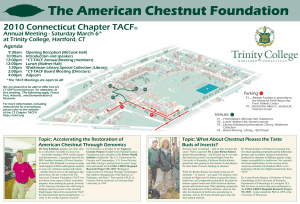
cttacf_trinity_2009_largeSaturday March 6th we’ll be hosting the annual meeting of the CT Chapter of The American Chestnut Foundation at Trinity College in Hartford, CT. We have interesting presenters and a fantastic venue – and hope you’ll mark you calendar and join us. Should you decide to join, you MUST RSVP by calling Kendra Gurney at 802.951.6771 x1350 or sending her an e-mail at gro.fca@ardnek.

We have been approved to offer qualified attendees two CEU hours of credit in the following licensing categories: Forest Pest Management (category 2), Arborist (category 3D) and Demonstration and Research (category 10). Submission forms and sign-up will be available at the meeting. For further information please contact gro.fca@ardnek.

Simply looking for directions? See the directions on the Trinity web-site. See the brochure with campus map in easily printable format with venue annotations for directions on how to get to each venue.

Topic: Accelerating the Restoration of American Chestnut Through Genomics

cttacf_annualmtgtrinity_6mar2010
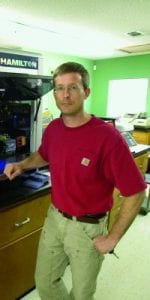
Dr. Tom Kusisiak Photo: John Butnor, USFS

Dr. Tom Kusisiak
Photo: John Butnor, USFS

Dr. Tom Kubisiak spends a lot of his time in a world that’s invisible to most of us — the double-stranded, DNA world of genes and chromosomes. A geneticist based at the SRS Southern Institute of Forest Genetics in Saucier, MS, Kubisiak is a master at using small snippets of DNA called genetic markers to tease out variations among individuals — whether they’re trees or the pathogens that infect them. He has worked with The American Chestnut Foundation (TACF) on just about every aspect of their restoration program, from charting the genetic diversity of the American chestnut trees still living to helping map the genome of the chestnut blight fungus. Most of his research for TACF has had immediate practical application — a rarity in the world of genetic research.

Dr. Kubisiak is a member of the Fagaceae Genome Project (Funded by the National Science Foundation) and a member of the “Forest Health Initiative” (funded by The U.S. Endowment for Forestry and Communities, U.S. Forest Service, and Duke Energy), and has been an active long-term participant in the USDA CREES Regional Research Project NE-1033 “Biological Improvement of Chestnut Through Technologies that Address Management of the Species, its Pathogens, and Pests.” Tom earned a Ph.D. in Forestry (Forest Genetics) at Louisiana State University in 1994.

For more information about our speaker, visit this article about Dr. Kubisiak at the Southern Research Station.

The presentations will be followed by operational meetings attended by those of you with an interest or business in attending. You are welcome to attend just those sections of the meeting that interest you as outlined in the agenda below.

Agenda

9:30am Opening Reception
10:00am Introduction and speakers
12:00pm CT-TACF Annual Meeting followed by Lunch
1:30pm Visit to Trinity’s Watkinson Library Special Collection
2:00pm CT-TACF Board Meeting – Open to All!
4:00pm Expected close of Chapter business

The program is free to both members and non-members, as is lunch for those who advance register. To advance register e-mail to indicate your interest in attending. Details on logistics, parking and presentation venues, will be provided well in advance of the meeting.

We thank Trinity College, and especially Dr. Scott Smedley, for their partnership in planning this meeting and providing the venue for the presentations.


Connecticut news Chapter Menu

National Facebook

Comments Box SVG iconsUsed for the like, share, comment, and reaction icons

Did you know some plants actually benefit from fire? Recently burned areas often provide the sunlight and reduced competition that species like blueberries and American chestnuts need to flourish.

#americanchestnut #nativeplants #ForestEcology #conservation #NatureEducation
... See MoreSee Less

4 CommentsComment on Facebook

Yes! Across the Eastern US, almost all of our most important keystone , overstory trees are fire adapted (pyrophytic 🔥). (Except in bottomlands/riparian/wetland zones, for the most part). This includes Hickories, the upland Oaks, certain pines, especially Longleaf, and Chestnuts. Many Oaks in particular are struggling with recruitment now due to fire suppression, among many other issues. This process is called mesophycation btw. Mesophytic natives like Maples 're-engineer' forests through their dense, moist leaf litter to retard-fires. Invasives make it worse. This is important because Oaks are THE top keystone plants here, hosting more species of Lepidoptera (Moths and Butterflies) than any other plant genus in the US: 500-900 species. Most of these caterpillars will become inconspicuous "little brown moths" , but they form an important massive bottom-tier of the food pyramid. After all, even though birds can source berries from a variety of plants , it takes 6-9000 caterpillars to raise a single clutch of songbirds.

I really appreciate what you are doing.

Thank you!

PICA, the Printing Industry of the Carolinas Awards, is celebrating its 60th year as the ultimate showcase of excellence in printing, and TACF has something to celebrate too.

Our partner in printing (BP Solutions Group) has entered Chestnut magazine in this competition for nearly 10 years and of those, TACF, BP, and designer Lisa Alford have received an award nearly every year, some of which included multiple awards within the same year!

Chestnut once again received a PICA Award for the 2025 competition, winning “Best of Category” for its “Sheetfed Magazine Series.” TACF is thrilled to have received this honor and to celebrate it with you!

Want to see what this award-winning magazine is all about? Become a member!

#americanchestnut #magazine #science #forestecology #explore
... See MoreSee Less

PICA, the Printing Industry of the Carolinas Awards, is celebrating its 60th year as the ultimate showcase of excellence in printing, and TACF has something to celebrate too. Our partner in printing (BP Solutions Group) has entered Chestnut magazine in this competition for nearly 10 years and of those, TACF, BP, and designer Lisa Alford have received an award nearly every year, some of which included multiple awards within the same year! Chestnut once again received a PICA Award for the 2025 competition, winning “Best of Category” for its “Sheetfed Magazine Series.” TACF is thrilled to have received this honor and to celebrate it with you!Want to see what this award-winning magazine is all about? Become a member!#americanchestnut #magazine #science #forestecology  #exploreImage attachmentImage attachment

1 CommentComment on Facebook

Big congratulations to you Jules! 🎉🎉 This is a well-deserved honor.

We've prepared a completely legitimate and highly scientific quiz.

Take the quiz, then drop your results in the comments:

🤓 Confidently Wrong
🌱 Chestnut Curious
🌰 Chestnut Expert

#AmericanChestnut #TreeID #ForestEducation #ChestnutTrees #NativeTrees
... See MoreSee Less

Weve prepared a completely legitimate and highly scientific quiz.Take the quiz, then drop your results in the comments:🤓 Confidently Wrong 🌱 Chestnut Curious 🌰 Chestnut Expert#AmericanChestnut #TreeID #ForestEducation #ChestnutTrees #NativeTreesImage attachmentImage attachment+7Image attachment

5 CommentsComment on Facebook

I got 3 out of 4!

I got a 4 on this.

🌱

View more comments

Just a few years apart: the same wild American chestnut tree before and after chestnut blight took its toll.

Enter our 2026 Photo Contest from now until the end of December!

#americanchestnut #chestnutblight #ForestEcology #NativeSpecies #ForestConservation
... See MoreSee Less

Just a few years apart: the same wild American chestnut tree before and after chestnut blight took its toll. Enter our 2026 Photo Contest from now until the end of December! #AmericanChestnut #ChestnutBlight #ForestEcology #NativeSpecies #ForestConservationImage attachmentImage attachment+1Image attachment

Please share your stories! ... See MoreSee Less

Please share your stories!Image attachment
Load more

Subscribe to the CT Chapter Newsletter

* indicates required